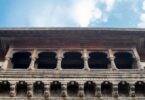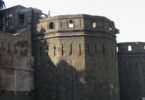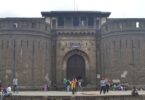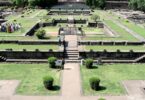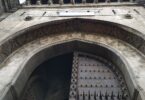

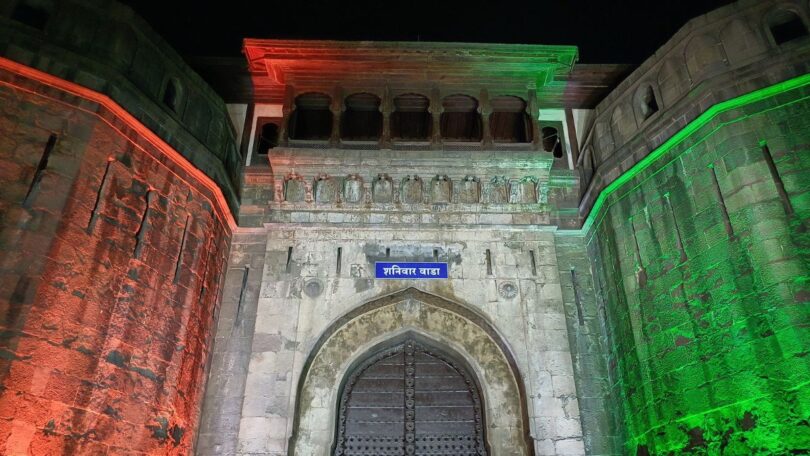

If you visit Shaniwar Wada during the day, you see an impressive ruin — weathered granite walls, five magnificent gates, the lotus fountain, the outline of what once was. It tells you what happened here. But the evening light and sound show does something the daytime visit cannot: it makes you feel what happened here.
The Shaniwar Wada Light and Sound Show has been running since 1975. For nearly five decades it has been telling the story of the Peshwas — Bajirao’s ambitions, Mastani’s love, Narayan Rao’s murder, the fall of the Maratha Empire — to audiences seated in the open air within the fort’s own walls. The illuminated fort, the dramatic narration, the music, and the darkness all combine into something that justifies staying for the evening.
This guide tells you everything you need to plan your show visit.
Show Timings — 2026
| Show | Language | Start Time | End Time | Duration |
|---|---|---|---|---|
| First Show | Marathi | 7:15 PM | 8:10 PM | 55 minutes |
| Second Show | English | 8:15 PM | 9:10 PM | 55 minutes |
Ticket booking opens: 6:30 PM daily at the main ticket counter near Delhi Darwaza.
Days: The show runs every day of the week, including weekends and public holidays.
Important note on timings: Timings have varied slightly across different sources and may change seasonally. Always confirm on arrival or call +91-20-2444-0762 before planning your evening around the show.
Ticket Price
| Visitor | Show Ticket Price |
|---|---|
| All visitors (Indian and foreign) | ₹25 per person |
| Children under 5 | Generally free — confirm at counter |
At ₹25, the light and sound show is one of the best-value heritage experiences in India. No advance online booking is generally required — pay at the counter from 6:30 PM onwards. On weekend evenings and public holidays, arrive early as seating can fill up.
What Happens During the Show — A Complete Preview
The show is a 55-minute audio-visual narration of the history of Shaniwar Wada and the Peshwa era. Visitors are seated in an open-air auditorium within the fort complex. As darkness falls, the fort walls, gates, and key structures are illuminated with coloured lights — and the narration begins.
The Story the Show Tells
The show covers the full arc of Peshwa history in dramatic, accessible storytelling:
- The rise of Bajirao I — his appointment at 20, his military campaigns, his ambition to conquer Delhi, the naming of the Delhi Darwaza
- The Bajirao-Mastani story — the controversial romance, Mastani’s place in the palace, the Mastani Darwaza, her fate after Bajirao’s death
- The golden era of Madhavrao I — the Peshwa who rebuilt the empire after Panipat
- The murder of Narayan Rao — the most dramatic and chilling segment of the show, with the illumination of the Ganesh Darwaza where he died and a recreation of the famous cry “Kaka mala vachva”
- The decline and fall — the British advance, the Third Anglo-Maratha War, Baji Rao II’s surrender
- The fire of 1828 — the show’s closing sequence, which visually dramatises the destruction of the palace
The Production
The show was produced at a cost of ₹1.25 crores when originally installed. The narration is scripted by historians and delivered in a dramatic register — this is not a dry academic recitation. The Marathi version tends to be more emotionally engaging for local audiences, drawing on the particular cultural weight that Maratha history carries in Maharashtra. The English version covers the same content with strong production but necessarily loses some of the cultural resonance.
The lighting design uses the actual fort structures as the canvas — the Delhi Darwaza is lit dramatically, the fountain is illuminated from below, the walls change colour as the story moves through different eras. For first-time visitors, the combination of the physical setting and the narration tends to be genuinely affecting.
Which Language to Choose — Marathi or English?
| Marathi Show (7:15 PM) | English Show (8:15 PM) | |
|---|---|---|
| Best for | Marathi speakers, visitors from Maharashtra, anyone who wants the fuller emotional experience | Non-Marathi speakers, foreign tourists, mixed groups |
| Content | Identical story — same history, same events | Identical story — same history, same events |
| Emotional impact | Higher for Marathi audiences — the language carries cultural weight | Excellent production, slightly less culturally resonant |
| Crowd type | Predominantly local Pune audiences and Maharashtra visitors | More mixed — tourists from other states and foreigners |
| Ticket availability | Books up faster on weekends | Usually more available |
Our recommendation: If you understand Marathi — even partially — go for the 7:15 PM show. The language adds a dimension that the English translation cannot fully replicate. If Marathi is not accessible to you, the English show at 8:15 PM is an excellent experience in its own right.
Practical Tips for the Show
- Arrive at 6:30 PM when ticket booking opens. This gives you time to buy tickets, find good seating, and be settled before the show starts at 7:15 PM.
- Seating: The open-air auditorium has rows of seats facing the illuminated fort. There is no “bad” seat, but central rows tend to give the best view of the full gate illumination. Arrive early for those positions.
- What to wear: It gets cool in the evenings — especially October to February. Carry a light jacket or shawl. The evening air inside the fort can be significantly cooler than outside.
- Mosquito repellent: The gardens inside the fort attract mosquitoes in the evening. Carry repellent, especially if visiting during or after monsoon season (July–October).
- Can you combine the daytime visit and the evening show? Yes — this is ideal. Visit the fort during the day (8 AM – 6:30 PM), grab dinner in the Laxmi Road area (10–15 minutes walk), then return for the show at 7:15 or 8:15 PM. It makes for a full and very satisfying day.
- Is the show cancelled on certain days? Occasionally cancelled during heavy monsoon rain or for government functions. Call ahead if visiting during monsoon season or on major public holidays.
- Photography during the show: Mobile phone photography is generally permitted but flash should be off. The illuminated fort makes for excellent photographs — the lighting design is specifically cinematic.
Before the Show — What to Do Between 6:30 PM and 7:00 PM
If you are arriving specifically for the evening show, you have about 45 minutes between the ticket counter opening and the show starting. Good options:
- Walk to Dagdusheth Ganpati Temple (300 metres) for a quick evening darshan — the temple is beautiful at night. The Mahamangal Aarti at 8:00 PM is one of the most atmospheric experiences in Pune. You could attend the Marathi show first (7:15–8:10 PM) and then walk to Dagdusheth for the aarti. Details: Dagdusheth Ganpati Temple Guide.
- Walk Laxmi Road for sweets and the evening market atmosphere.
- Have chai at one of the tea stalls near the Shaniwar Wada entrance — strong Maharashtrian cutting chai is available for ₹10–15 and is the correct way to begin an evening at a Maratha palace.
FAQs
What time is the Shaniwar Wada light and sound show?
The Marathi show runs from 7:15 PM to 8:10 PM. The English show runs from 8:15 PM to 9:10 PM. Ticket booking opens at 6:30 PM.
How much is the Shaniwar Wada light and sound show ticket?
₹25 per person for all visitor categories.
How long is the Shaniwar Wada show?
55 minutes for both the Marathi and English shows.
Is Shaniwar Wada light and sound show worth it?
Yes — at ₹25, it is exceptional value. The combination of the illuminated fort at night, the dramatic narration of Peshwa history, and the open-air atmosphere makes it one of the best heritage show experiences in Maharashtra. First-time visitors almost unanimously say it was the highlight of their Pune heritage visit.
Can I book Shaniwar Wada show tickets online?
Tickets are generally purchased in person at the counter from 6:30 PM. Check the Archaeological Survey of India website or authorised booking platforms for any updated online booking options.
Also read:
→ Shaniwar Wada Complete Visitor Guide
→ Shaniwar Wada Complete History
→ The Haunted Story of Narayan Rao
→ 1-Day Pune Heritage Itinerary