
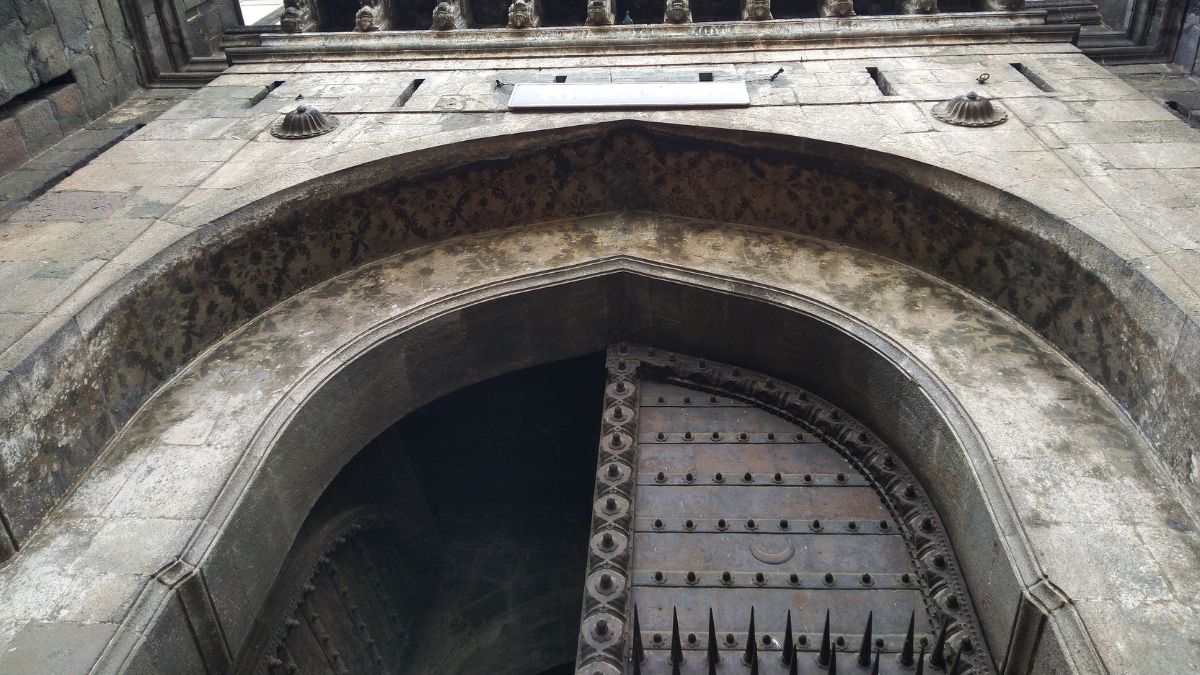
Shaniwar Wada is the most important building Pune has ever produced. Not the most beautiful — parts of it are rubble now, and have been for nearly two centuries. But no other structure in Maharashtra carries the same weight of history, the same concentration of stories, or the same ability to stop a first-time visitor in their tracks and make them ask: what exactly happened here?
The answer to that question takes you through a century of Maratha power, a political murder that still haunts the walls, a love story made famous by Bollywood, and a fire that burned for seven days in 1828 and was never fully explained. All of that — and a granite fort that has survived it all — sits at the centre of old Pune, within walking distance of two of Maharashtra’s other most significant landmarks.
This guide tells you everything you need to plan your visit to Shaniwar Wada: the 2026 timings, the entry fee, where to park without getting fined, what to see inside, the best time to go, and the things most guides leave out.
Shaniwar Wada Pune — Quick Facts at a Glance
| Detail | Information |
|---|---|
| Full Name | Shaniwar Wada |
| Address | Shaniwar Peth, Bajirao Road, Pune – 411 030 |
| Phone | +91-20-2444-0762 |
| Timings | 8:00 AM to 6:30 PM (daily, no weekly holiday) |
| Entry Fee — Indian Adults | ₹25 per person |
| Entry Fee — Children under 15 | Free |
| Entry Fee — Students | ₹10 (with valid ID) |
| Entry Fee — Foreign Nationals | ₹300 per person |
| Photography | Permitted (mobile phone included in entry) |
| Time Needed | 1.5 to 2 hours for a thorough visit |
| Nearest Landmark | Dagdusheth Halwai Ganpati Temple — 300 metres |
| Maintained by | Archaeological Survey of India (ASI) |
Shaniwar Wada Timings 2026 — Day-by-Day Schedule
Shaniwar Wada is open every single day of the year, including Sundays, public holidays, and during the Ganesh Chaturthi festival period. There is no weekly closure and no seasonal shutdown.
The fort opens at 8:00 AM and closes at 6:30 PM. Last entry is typically accepted around 6:00 PM — if you arrive at 6:20 PM, there is a real chance the ticket counter will turn you away. Build that buffer into your planning.
Important: On major government holidays or during official events held inside the premises, the public entry area may be restricted temporarily. If you are travelling specifically to visit Shaniwar Wada on a national holiday, a quick call to +91-20-2444-0762 ahead of time will confirm access on that day.
The single most underrated time to visit Shaniwar Wada is the first hour after opening — 8:00 AM to 9:00 AM on a weekday. The light is extraordinary at that hour, the fort is nearly empty, and the granite walls catch the morning sun at exactly the angle that makes the Delhi Darwaza look like the entrance to something worth protecting. Which, once, it was.
Shaniwar Wada Entry Fee — Complete Breakdown for 2026
Shaniwar Wada is maintained by the Archaeological Survey of India and follows ASI’s standard entry fee structure. At ₹25 for Indian adults, it remains one of the most affordably priced heritage experiences in Maharashtra — a fact that makes the number of visitors who arrive underprepared for the parking situation all the more surprising.
| Visitor Category | Entry Fee |
|---|---|
| Indian adult | ₹25 |
| Children under 15 years | Free |
| Students (with valid college/school ID) | ₹10 |
| Senior citizens (65+) | Concessional — confirm at counter |
| Foreign nationals | ₹300 |
Tickets are purchased at the main ticket counter beside the Delhi Darwaza (the main gate). No advance online booking is required for the daytime visit — you pay at the counter and walk in. There is no separate camera fee for mobile phones; DSLR cameras may attract an additional permit charge, so confirm at the counter if you are carrying professional equipment.
The Archaeological Survey of India manages ticketing for all ASI-protected sites across India. You can find the official ASI listing for Shaniwar Wada at the Archaeological Survey of India website.
How to Reach Shaniwar Wada Pune
Shaniwar Wada sits in the heart of old Pune, in the neighbourhood called Shaniwar Peth, on Bajirao Road. Every auto-rickshaw driver in Pune knows it by name — you will never need to explain directions beyond saying “Shaniwar Wada.”
From Pune Junction Railway Station
Approximately 3.5 kilometres. Auto-rickshaw takes 10 to 15 minutes depending on traffic; fare is typically ₹60 to ₹100. Cab services like Ola and Uber take 12 to 18 minutes from the station forecourt. This is the most common arrival route for visitors coming from outside Pune.
From Shivajinagar Station
Shivajinagar is the closest railway station at 1.7 kilometres. Auto fare is ₹40 to ₹60, and the ride takes 5 to 8 minutes. If you are on the Pune commuter rail network, Shivajinagar is the better option.
From Pune Airport
Approximately 12 kilometres. A cab takes 25 to 40 minutes depending on time of day; fare typically ₹300 to ₹500. The airport to old city route passes through some of Pune’s most congested corridors — avoid arriving between 8:00 AM to 10:00 AM or 5:00 PM to 8:00 PM if time is a consideration.
By Pune Metro
The nearest Metro station on Line 1 (the Purple Line) is Budhwar Peth, approximately 800 metres from Shaniwar Wada — about a 10-minute walk. The Purple Line connects Swargate in the south to PCMC Bhavan in the north, passing through Shivajinagar. If you are coming from Swargate, the metro is now a genuinely practical option.
By PMPML City Bus
Multiple PMPML routes serve the Bajirao Road and Shaniwar Peth area. The bus network is comprehensive but crowded and slower than metro or auto during peak hours. For a first visit where timing matters, auto or metro is more reliable.
Shaniwar Wada Parking — The Honest Truth
This is the section most visitor guides quietly skip, leaving people to discover the problem themselves. Parking near Shaniwar Wada in Pune is genuinely complicated, and getting it wrong costs you time, money, or both.
Pune’s P1/P2 Alternate-Side Parking System
Pune traffic police enforce an alternate-side parking system on many roads in the old city area around Shaniwar Wada. Understanding this system before you arrive saves you from a ₹500+ challan:
- P1 days (odd dates — 1st, 3rd, 5th… of the month): Park only on the left side of the road relative to traffic flow.
- P2 days (even dates — 2nd, 4th, 6th… of the month): Park only on the right side of the road relative to traffic flow.
Parking on the wrong side on the wrong date is a punishable offence regardless of how empty that side appears. Pune traffic police specifically monitor the roads around Shaniwar Wada on weekends, and first-time out-of-town visitors are frequently caught by this rule.
No-Halting and No-Stopping Zones
The road directly in front of the Delhi Darwaza main entrance is a no-halting zone — meaning even slowing down to let passengers out is technically a violation. Do not let your car or cab idle here while people gather bags and get organised. Pull to the side before the main gate area, let everyone out, and then park or move on.
Where to Actually Park
Option 1: The Fort’s Own Parking Lot. There is a small paid parking area inside the fort compound, accessible from Bajirao Road. It holds approximately 15 to 20 four-wheelers. Cost is nominal (around ₹20 to ₹40). On weekdays before 9:30 AM it is usually available; on weekends and public holidays it fills by 9:00 AM. Approach from Bajirao Road, keeping the fort walls on your left — the parking entry is on your right before you reach the main gate.
Option 2: Bajirao Road Street Parking. Street parking is available along Bajirao Road subject to P1/P2 rules. Check the date before you park. This is a 2 to 5 minute walk from the main gate.
Option 3: Park further away and walk. The Laxmi Road and Vishrambag Wada area has more parking availability. The walk from those points to Shaniwar Wada takes 8 to 12 minutes through the old city lanes — and those lanes are worth seeing.
Our honest recommendation: If you are visiting on a weekend or public holiday, do not drive all the way to the fort. Park at a landmark further from the old city — Shivajinagar, FC Road, or Deccan Gymkhana — and take a short auto-rickshaw ride to Shaniwar Wada. The fare will be ₹50 to ₹100, the parking will be simpler, and you will avoid the one-way road confusion that catches most first-time drivers near the fort.
One-Way Trap
The road running around Shaniwar Wada operates as a one-way circuit. The correct direction of travel is clockwise around the fort. Approaching the parking entry or the main gate from the wrong direction means you are going against traffic on a one-way road — a violation that Pune traffic police at the Bajirao Road junction specifically look for. Enter from Bajirao Road from the Shivajinagar side, not from the Laxmi Road side.
What to See Inside Shaniwar Wada — A Complete Walkthrough
The original Shaniwar Wada was a seven-storey palace covering 625 acres — a city within a city, home to the Peshwas and their entire court for nearly a century. A devastating fire in 1828 destroyed the upper floors and left the stone foundations, the fortification walls, and the five gates largely intact. What you visit today is the archaeological residue of something far grander — but the residue itself is worth two hours of careful attention.
The Five Gates — The Heart of the Visit
Shaniwar Wada’s five gates are its most important surviving feature. Each has a name, a story, and a reason to stop:
- Delhi Darwaza (Delhi Gate) — North side, main entrance. The largest gate at 21 feet tall, named for Peshwa Bajirao I’s ambition to conquer Delhi. The 72 iron spikes across its surface — each 12 inches long — were defensive engineering designed to stop war elephants from ramming the gate. Stand inside the gate and look back out toward Bajirao Road: the iron spikes against the morning sky make one of the most striking photographs available anywhere in old Pune.
- Mastani Darwaza (Mastani Gate) — North side, near the main gate. Named for Mastani, the companion of Bajirao I, whose controversial relationship with the Peshwa became the subject of the 2015 Bollywood film. The gate is smaller and more ornate than the Delhi Darwaza. If you know the story — and the dedicated article on this site goes into the full history — standing here carries a particular weight.
- Khidki Darwaza (Window Gate) — East side. The smallest of the five gates, this served as the domestic entrance for staff and supplies. Its modest scale is itself telling: even the gates of Shaniwar Wada encoded the social hierarchies of 18th-century Peshwa court life.
- Ganesh Darwaza (Ganesh Gate) — Southeast side. Named for the Ganesh temple within the original palace complex. This gate is also the location where Peshwa Narayan Rao was murdered in 1773 — the event at the heart of Shaniwar Wada’s enduring haunted reputation.
- Narayan Darwaza (Narayan Gate) — South side. Named as a permanent memorial to the murdered Peshwa. It is the only gate whose name commemorates a tragedy rather than an ambition, a person, a function, or a deity.
A full account of all five gates — with architectural details, the stories behind each, and a suggested walking route — is in our dedicated article: Five Gates of Shaniwar Wada — Every Gate, Every Story.
The Hazari Karanje — Lotus Fountain
At the centre of what was once the palace’s main courtyard stands the Hazari Karanje — the lotus fountain. It was designed in the shape of a 16-petal lotus and originally fed by 272 water jets. “Hazari” (meaning a thousand) was hyperbole, but understandable hyperbole: a fountain with 272 jets in 18th-century India was a marvel of hydraulic engineering.
The fountain has been partially restored and is the central visual anchor of the inner grounds today. Get low to shoot it — crouching at ground level and shooting the lotus shape against the fort walls gives a composition that standing-height photographs never achieve.
The Nagarkhana
The Nagarkhana — literally “the drum house” — was where official announcements were made to the palace population. The carved wooden pillars supporting its structure are among the finest surviving examples of Peshwa-era craftsmanship in the fort. Most visitors walk past quickly; the woodwork rewards slower attention.
The Garden
The central garden survived the 1828 fire largely intact. It follows the Mughal-influenced formal garden design that the Peshwas favoured — not entirely organic and wild, but structured around walkways and planting patterns. In the early morning, before the crowds arrive, the garden is quiet enough to feel like it belongs to a different era. During monsoon season (July to September), the grass is vivid green and the whole compound looks entirely different from its dry-season appearance.
Best Time to Visit Shaniwar Wada — Our Honest Recommendation
The straightforward answer is weekday mornings, between 8:00 AM and 9:30 AM. At that hour you will often have entire sections of the fort to yourself. The light is at its best for photography, the temperature is comfortable, and nothing about the experience feels rushed.
The more nuanced answer depends on what you want from the visit:
- For photographs: Late afternoon, 4:00 PM to 5:30 PM, is golden-hour territory. The warm light on the granite walls at that time of day makes every composition look better than it deserves to.
- For solitude: 8:00 AM on any weekday. You may have the garden almost entirely to yourself for the first thirty minutes.
- For atmosphere: October to February, when Pune’s weather is at its most comfortable — cool mornings, clear light, no rain.
- For avoiding regret: Not a Sunday afternoon in any school holiday period. Weekend afternoons between 11:00 AM and 4:00 PM during holidays can be genuinely crowded, with school groups and families making quiet contemplation difficult.
“No two visits to Shaniwar Wada feel the same. The morning version of this fort and the afternoon version are almost different places.” — a consistent observation from regular Pune heritage walkers, and one worth taking seriously when planning your timing.
What to Wear and Carry
Shaniwar Wada’s ground surfaces are uneven — a mix of rough stone paths, exposed foundations, and garden grass that gets muddy in monsoon. Comfortable closed-toe shoes are essential. Sandals are manageable in dry months but inadvisable during or after rain. Heels are a genuinely bad idea at any time of year.
There is no drinking water available inside the fort compound. Carry your own water, particularly if visiting between March and June when Pune temperatures can climb above 35°C by mid-morning.
A light cotton layer is useful even in summer, as the granite walls create pockets of shade that can feel noticeably cooler than the open garden areas.
Nearby Attractions Within Walking Distance of Shaniwar Wada
Shaniwar Wada sits at the centre of the most historically dense square kilometre in Pune. Everything below is reachable on foot:
| Attraction | Distance | Walking Time |
|---|---|---|
| Dagdusheth Halwai Ganpati Temple | 300 metres | 5 minutes |
| Laxmi Road (Pune’s famous shopping street) | 200 metres | 3 minutes |
| Lal Mahal (Shivaji’s childhood home) | 1 kilometre | 12 minutes |
| Raja Dinkar Kelkar Museum | 1.4 kilometres | 18 minutes |
| Tulshibaug Market | 500 metres | 7 minutes |
| Pataleshwar Cave Temple (8th century) | 2.5 kilometres | Short auto ride |
The Dagdusheth Ganpati Temple at 300 metres is so close that almost every Shaniwar Wada visitor includes it in the same trip. If you are planning a full heritage day in Pune combining both these sites with Kelkar Museum and Lal Mahal, the detailed plan is in our One Day in Pune Itinerary.
Where to Eat Near Shaniwar Wada Pune
The old city area around Shaniwar Wada has some of Pune’s most authentic and most historic eating spots. These are the ones worth knowing:
- Bedekar Misal (Narayan Peth, 10-minute walk): Since 1948, one location only, no branches. Pune’s most acclaimed misal pav — the Puneri style with its sharp tarri broth and dry coconut-based masala. Arrives early and sells out by noon. Our dedicated food guide covers the full list: Best Misal Pav in Pune.
- Modak stalls outside Dagdusheth Ganpati Temple (300 metres): Fresh ukdiche modak (steamed rice dumplings with coconut and jaggery filling) made daily. The morning batch is the best.
- Chai tapris on Bajirao Road and Laxmi Road: Strong, double-boiled cutting chai at ₹10 to ₹15 a glass from roadside stalls that have been in the same spots for decades.
- Chitale Bandhu Mithaiwale (Laxmi Road, 5-minute walk): Pune’s most famous sweet shop. Bakarwadi — their signature spiral savoury biscuit — is what everyone takes home from Pune. Available to buy and carry.
The History of Shaniwar Wada — Briefly
The full story of Shaniwar Wada — seven Peshwas, a century of Maratha power, a political murder, and a mystery fire — deserves its own dedicated article, and we have written one: Shaniwar Wada History — The Complete Story of Bajirao, the Peshwas and the 1828 Fire.
The essential facts for a first-time visitor:
Shaniwar Wada was built by Peshwa Bajirao I, the Prime Minister of the Maratha Empire, in 1730. The name derives from the day the foundation was laid — Shaniwar means Saturday in Marathi, and Wada means a large residential complex. It served as the seat of Maratha power under seven successive Peshwas until 1818, when the British East India Company defeated the last Peshwa in the Third Anglo-Maratha War.
Ten years later, on 27 February 1828, a fire broke out in the compound and burned for seven continuous days. The upper six storeys of the original seven-storey palace were destroyed. The cause was never established — three competing theories have been debated by historians ever since. What survived was the stone ground floor, the fortification walls, the five teak gates, and the Hazari Karanje fountain.
The fort you visit today is, in a sense, the skeleton of something far more magnificent. But it is a skeleton that still has more to say than most complete buildings.
Frequently Asked Questions About Shaniwar Wada Pune
What are Shaniwar Wada timings?
Shaniwar Wada is open every day from 8:00 AM to 6:30 PM, including weekends and public holidays. Last entry is approximately 6:00 PM. There is no weekly closure.
What is the Shaniwar Wada entry fee in 2026?
₹25 for Indian adults. Children under 15 enter free. Students pay ₹10 with a valid ID. Foreign nationals pay ₹300.
Is there parking at Shaniwar Wada?
There is a small paid parking lot inside the compound, accessible from Bajirao Road, with capacity for approximately 15 to 20 cars. It fills by 9:00 AM on weekends. Street parking on Bajirao Road is available subject to Pune’s P1/P2 alternate-side parking rules. On weekends, we recommend parking outside the immediate old city area and taking a short auto-rickshaw to the fort.
What is the P1/P2 parking rule in Pune near Shaniwar Wada?
On odd dates (1st, 3rd, 5th…) of the month, park only on the left side of the road. On even dates (2nd, 4th, 6th…), park only on the right side. Parking on the wrong side is a chargeable offence, typically ₹500 or more. Traffic police specifically monitor the roads around Shaniwar Wada.
How long does a visit to Shaniwar Wada take?
A thorough visit — seeing all five gates, the Hazari Karanje fountain, the Nagarkhana, and the garden — takes 1.5 to 2 hours. If you are particularly interested in the architecture or history, allow 2.5 hours.
Is Shaniwar Wada haunted?
It is associated with the 1773 murder of Peshwa Narayan Rao inside the fort, which has generated significant folklore about the site over 250 years. The full story — including what the historical record actually says versus what has become legend — is in our dedicated article: Shaniwar Wada Haunted Story — The True History of Narayan Rao’s Ghost.
Is Shaniwar Wada worth visiting?
Yes — unambiguously. At ₹25, it is one of the best-value heritage experiences in Maharashtra. The combination of architectural scale, layered history, and the stories embedded in each of the five gates makes it a site that rewards a slow, informed visit far more than a quick walk-through. Go early in the morning on a weekday if you can.
What is the best time to visit Shaniwar Wada?
8:00 AM to 9:30 AM on a weekday for the quietest, most atmospheric experience. Late afternoon (4:00 PM to 5:30 PM) for the best photography light. Avoid weekend afternoons during school holiday periods.
Can I reach Shaniwar Wada by Pune Metro?
Yes — the nearest station is Budhwar Peth on the Purple Line (Line 1), approximately 800 metres from the fort, a 10-minute walk.
What is near Shaniwar Wada within walking distance?
Dagdusheth Halwai Ganpati Temple (300 metres, 5 minutes), Laxmi Road shopping street (200 metres, 3 minutes), Lal Mahal (1 kilometre, 12 minutes), and Raja Dinkar Kelkar Museum (1.4 kilometres, 18 minutes).
Explore More About Shaniwar Wada:
7 thoughts on “Shaniwar Wada Pune — Complete Visitor Guide 2026 (Timings, Entry Fee, Parking and Insider Tips)”