
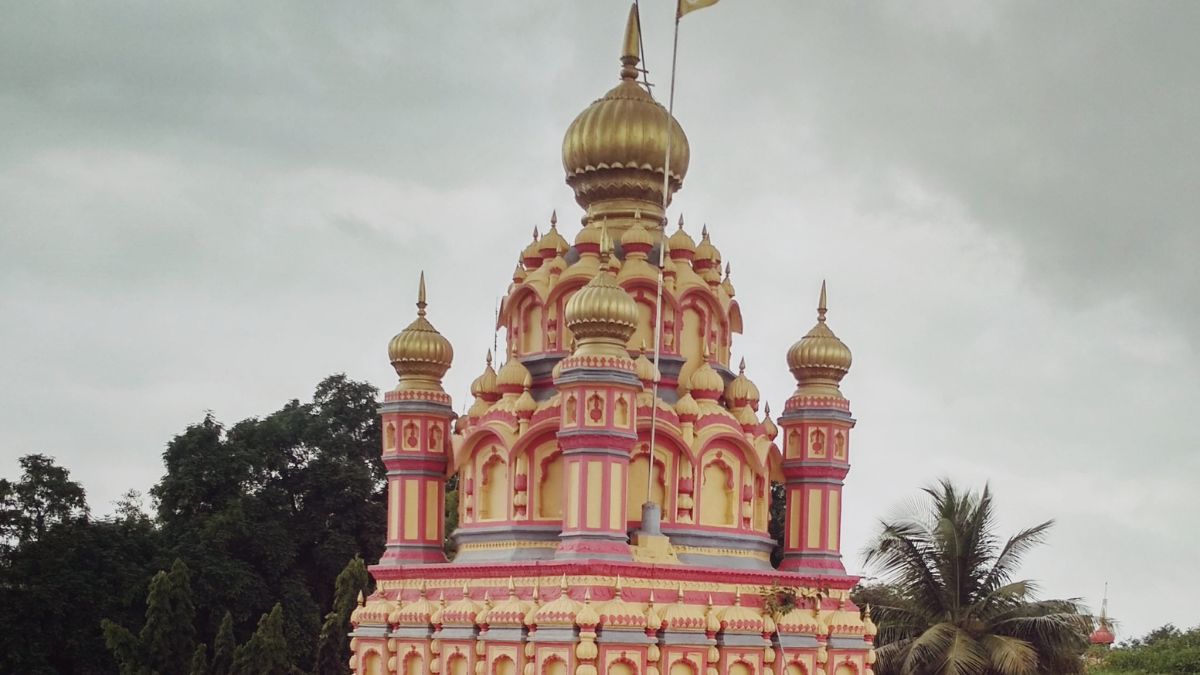
There is a moment about two-thirds of the way up the 103 steps of Parvati Hill Pune when the city spreads out below you and you realise that what you are climbing is not just a hill with temples at the top. You are climbing the most personally significant piece of geography in Pune’s 18th-century history — the place the Peshwas chose as their spiritual home, the viewpoint from which they watched the city they were building, and one of the finest natural vantage points over any Indian city that remains this accessible and this undervisited.
Parvati Hill Pune is 103 steps. Five temples at the summit. A Peshwa-era museum. A sunrise that photographers drive from across Maharashtra to experience. And the beginning of a walk to Saras Baug, 800 metres away, where the morning continues as naturally as if the two places were designed to be part of the same itinerary — which, during the Peshwa period, they essentially were.
Parvati Hill Pune — Quick Facts at a Glance
| Detail | Information |
|---|---|
| Address | Parvati Hill Road, Parvati, Pune – 411 009 |
| Garden / Steps Opening | 5:00 AM daily |
| Temple Timings | 7:00 AM to 12:00 PM and 4:00 PM to 8:00 PM |
| Peshwa Museum Timings | 9:00 AM to 12:00 PM and 2:00 PM to 5:00 PM (closed Monday) |
| Entry Fee — Garden / Steps | Free |
| Entry Fee — Peshwa Museum | Nominal — confirm at entry |
| Number of Steps | 103 |
| Altitude | Approximately 2,100 feet above sea level |
| Number of Temples | Five |
| Distance from Swargate | 2.5 kilometres — auto 8 minutes |
| Distance from Saras Baug | 800 metres — 10 minutes walk |
Parvati Hill Pune Timings 2026
The steps and garden area of Parvati Hill Pune open at 5:00 AM daily — early enough for sunrise visits, which are the primary reason most serious visitors choose to be here before 6:00 AM.
The five temples at the summit have their own operating schedule, independent of the steps and garden: 7:00 AM to 12:00 PM and 4:00 PM to 8:00 PM. This means early morning visitors (arriving before 7:00 AM for sunrise) can climb the hill and experience the view before the temple inner sanctums open. The temples open in time for morning darshan, and the evening session captures the hour when the sunset light over Pune from the Parvati Hill Pune summit is at its most dramatic.
The Peshwa Museum at the summit follows a more restricted schedule: 9:00 AM to 12:00 PM and 2:00 PM to 5:00 PM, closed on Mondays. Plan your visit around this if the museum is a priority — visiting on Monday or outside these hours means the museum is inaccessible.
The 103 Steps — What the Climb Is Actually Like
Parvati Hill Pune’s 103 steps are the defining physical experience of the visit — and they are worth understanding before you arrive, because the character of those steps is different from what the number alone suggests.
The steps are made from stone and have been worn smooth by generations of daily climbers. They are wide enough for two people to pass comfortably. The gradient varies — the lower section is relatively gentle, the middle section steepens, and the upper portion levels off as you approach the temple complex. For a reasonably fit adult, the climb takes 10 to 15 minutes at a moderate pace. For someone less accustomed to stair climbing, allow 20 to 25 minutes without urgency.
There are rest points along the climb — stone platforms and carved niches where pilgrims and walkers traditionally stop, drink water, and catch breath. The view from the midpoint is already significant; the view from the top makes the effort entirely worthwhile regardless of fitness level.
What the steps of Parvati Hill Pune are not suitable for: wheelchairs, pushchairs, and visitors with severe knee problems. The surface is uneven and the steeper sections require confident footing. If any of these apply to your group, the summit view is worth describing honestly — it cannot be reached without climbing.
Early morning walkers who live in the Parvati neighbourhood complete multiple circuits of the steps as their daily exercise — 103 steps up and 103 steps down, repeated 3 to 5 times. This community of regulars gives Parvati Hill Pune its particular early morning character: not a tourist site coming alive, but a neighbourhood hill that happens to have a magnificent heritage complex at the top.
The Five Temples of Parvati Hill Pune
The summit of Parvati Hill Pune is occupied by a complex of five temples, all built during the Peshwa period (18th century) and maintained in active worship. Understanding each temple separately gives structure to a visit that can otherwise feel like a single undifferentiated experience.
1. Devdeveshwar Temple — The Most Sacred and the Most Significant
The Devdeveshwar Temple is the primary temple of Parvati Hill Pune — the largest, the oldest, and the one with the closest connection to the Peshwa court. It was built by Peshwa Balaji Bajirao (Nana Saheb) in the mid-18th century, and its construction marked the formalisation of Parvati Hill Pune as an official Peshwa religious site.
“Devdeveshwar” combines dev (deity/divine) and ishwar (Lord, specifically Shiva) — making this a Shiva temple of the highest spiritual designation. The idol within the inner sanctum is a naturally occurring black stone lingam rather than a crafted idol — a characteristic of the oldest and most revered Shiva temples in the Deccan tradition.
The Devdeveshwar Temple at Parvati Hill Pune was the spiritual anchor of the Peshwa court’s relationship with this hill. Senior Peshwas would come here for specific rituals and prayers before major military campaigns — including, according to some historical accounts, Peshwa Madhavrao I during the period of his recovery from tuberculosis in the 1770s.
2. Parvati Temple — The Goddess at the Highest Point
The Parvati Temple — dedicated to Goddess Parvati, consort of Shiva — sits at the highest accessible point of Parvati Hill Pune and gives the hill its name. It is smaller than the Devdeveshwar Temple but occupies the most commanding position on the summit, with views in multiple directions from its immediate surroundings.
The temple is architecturally notable for its shikhara (tower spire) — a distinctive pointed structure that is visible from parts of the city below and serves as a visual marker of Parvati Hill Pune from the surrounding neighbourhoods.
3. Kartik Swami Temple
Kartik Swami — Kartikeya, the son of Shiva and Parvati and the divine general of the gods — is worshipped in a separate temple within the Parvati Hill Pune complex. Kartik temples are less common in Maharashtra than in South India (where Murugan, as he is called, is the primary deity of Tamil religious culture), which makes this temple an interesting regional variation. The temple sees increased activity during the month of Kartik (October–November) in the Hindu calendar.
4. Vishnu Temple
The Vishnu Temple at Parvati Hill Pune is dedicated to Vishnu in his role as the preserver deity. Peshwa religious practice encompassed multiple deity traditions — Ganesh, Shiva, Parvati, Vishnu — and the Parvati Hill Pune complex reflects this breadth. The temple is architecturally simpler than the Devdeveshwar or Parvati temples but is consistently maintained for daily worship.
5. Ganpati Temple
The Ganpati Temple at Parvati Hill Pune is the smallest of the five, dedicated to Lord Ganesha — the most universally worshipped deity in Maharashtra. In Peshwa religious practice, any major temple complex without a Ganesh shrine would have been considered incomplete; the Ganpati Temple here occupies the appropriate position as the first deity approached, which in Hindu tradition precedes all other worship.
The Peshwa Museum at Parvati Hill Pune
Adjacent to the temple complex at the summit of Parvati Hill Pune is a small museum maintained by the Maharashtra government housing Peshwa-era artefacts. The collection includes weapons, personal objects, miniature paintings, documents, and ceremonial items from the period when the Peshwas actively used Parvati Hill Pune as a retreat and spiritual centre.
The Peshwa Museum is not large — a thorough walk through takes 30 to 45 minutes — but it provides direct material context for the temples and the hill. Seeing the personal objects of the Peshwas who climbed these same 103 steps for their prayers adds a layer of historical texture to the visit that the temple complex alone cannot provide.
Museum hours: 9:00 AM to 12:00 PM and 2:00 PM to 5:00 PM. Closed on Mondays. If the museum is part of your visit plan, choose any other day of the week and time your arrival at the summit to overlap with the museum’s open hours.
Parvati Hill Pune Sunrise — The Best Viewpoint in the City
The sunrise from Parvati Hill Pune is one of those experiences that people describe in ways that sound like exaggeration until you are standing there watching it happen.
From the summit, the entire city of Pune spreads out to the north and east — the old city’s compact neighbourhoods, the newer development pushing toward Khadki and Pimpri-Chinchwad, the line of the Mutha River cutting through, and in the far distance on clear winter mornings, the Sahyadri foothills rising to the west. At sunrise, the entire panorama goes through a colour progression — from pre-dawn grey to the first orange at the horizon to the full gold of early light on the city — that takes approximately 20 minutes and is worth every minute of the early morning effort required to be there for it.
The best months for Parvati Hill Pune sunrise are October to February, when the air is clear and the horizon is defined. Monsoon sunrises (June to September) are more atmospheric but less visually clear — the low cloud and mist can be beautiful but unpredictable. Summer sunrises (March to May) are earlier and often hazy.
A dedicated guide to the Parvati Hill Pune sunrise experience — with month-by-month sunrise times, photography settings, and what to carry for a 5:00 AM visit — is in our dedicated article: Parvati Hill Sunrise Pune — Best Viewpoint Guide.
How to Reach Parvati Hill Pune
Parvati Hill Pune is located in the Parvati neighbourhood, in southern Pune, approximately 2.5 kilometres from Swargate and 4 kilometres from the old city heritage sites (Shaniwar Wada, Dagdusheth Ganpati).
From Swargate Bus Stand
2.5 kilometres. Auto-rickshaw 8 to 10 minutes; fare ₹40 to ₹70. This is the most common approach for visitors combining swargate bus stand pune with a Parvati Hill Pune visit.
From Shaniwar Wada / Old Pune
Approximately 4 kilometres. Auto-rickshaw 12 to 18 minutes; fare ₹70 to ₹100.
By Pune Metro
The nearest Purple Line station is Swargate Metro Station, approximately 2.5 kilometres from the base of Parvati Hill Pune. Take the metro to Swargate and then an auto to the hill base.
Parking at Parvati Hill Pune
Paid parking is available at the base of the hill near the steps entrance. On weekday mornings the parking area is manageable; weekend mornings from 7:00 AM onward can fill quickly. For sunrise visits (before 6:00 AM), parking is generally straightforward as most other visitors have not yet arrived.
Combining Parvati Hill Pune With Saras Baug
Parvati Hill Pune and Saras Baug are 800 metres apart — a 10-minute walk — and the natural combination of both in the same morning is one of Pune’s most satisfying local experiences. The suggested sequence:
- 5:30 AM: Arrive at Parvati Hill Pune base. Begin the 103-step climb.
- 5:50 AM: Summit. Wait for sunrise. Explore the temple complex exterior (temples open at 7:00 AM).
- 7:00 AM: Temple darshan — all five temples.
- 7:45 AM: Peshwa Museum (if visiting on a non-Monday, museum opens 9:00 AM — enjoy the view until then).
- 8:30 AM: Descend to base.
- 8:45 AM: Walk 800 metres to Saras Baug.
- 9:00 AM: Garden walk and Ganesh temple darshan at Saras Baug.
- 10:00 AM: Breakfast at the food stalls near Saras Baug main gate.
Frequently Asked Questions About Parvati Hill Pune
How many steps are there at Parvati Hill Pune?
103 steps from the base to the temple complex at the summit.
What are Parvati Hill Pune timings?
Steps and garden open at 5:00 AM daily. Temples open 7:00 AM to 12:00 PM and 4:00 PM to 8:00 PM. Peshwa Museum 9:00 AM to 12:00 PM and 2:00 PM to 5:00 PM (closed Monday).
Is Parvati Hill Pune free to visit?
Yes — climbing the steps and visiting the temples is free. The Peshwa Museum charges a nominal entry fee. Parking at the base has a small charge.
How many temples are at Parvati Hill Pune?
Five: Devdeveshwar Temple (Shiva, the main temple), Parvati Temple, Kartik Swami Temple, Vishnu Temple, and Ganpati Temple.
What is the best time to visit Parvati Hill Pune?
For sunrise: arrive at the base at 5:30 AM. For a relaxed visit with temple darshan: 7:00 AM to 9:00 AM on a weekday. Avoid Sunday mornings from 8:00 AM to 11:00 AM when the steps are at their most crowded.
Is Parvati Hill Pune good for trekking?
The 103 steps are a walk rather than a trek — no special equipment or fitness preparation needed. For serious trekking near Pune, Sinhagad Fort Pune (35 km) is the appropriate destination: Sinhagad Fort Complete Guide.
Explore More: