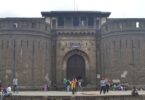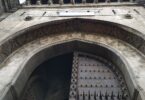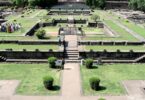


Of all the stories told about Shaniwar Wada, none is repeated more often — or with more genuine unease — than the story of Narayan Rao’s ghost. Local guides tell it in hushed tones. Tourists ask about it before they ask about anything else. And on full moon nights, some residents of old Pune still claim they can hear a young man’s voice crying out from within the fort’s walls.
This is the complete story — the historical murder that started the legend, what people claim to experience, and an honest look at what is verifiable history versus what has grown into folklore over 250 years.
📍 Want the full Shaniwar Wada story first? Read our Complete History of Shaniwar Wada for the full context of the Peshwa era.
Who Was Narayan Rao?
Narayan Rao was the fifth Peshwa of the Maratha Empire — the youngest of the major Peshwas, appointed in 1772 at just 17 years old. He was the posthumous expectation of a dynasty already shaken by the catastrophic defeat at the Third Battle of Panipat in 1761, which had killed an entire generation of Maratha leadership including his father’s predecessor Nana Saheb.
Narayan Rao inherited not just a title but a deeply unstable political situation. His uncle, Raghunath Rao, had served as regent and effectively ruled the Maratha state during the period after Panipat. When the young Narayan Rao came of age and was formally installed as Peshwa, Raghunath Rao was expected to step back. He did not want to.
The Conspiracy
Raghunath Rao, along with his wife Anandibai, began plotting to remove Narayan Rao and reclaim power. The most widely told version of what happened next involves one of history’s most consequential clerical errors — or, depending on which historians you believe, one of history’s most chilling acts of deliberate deception.
The story goes that Raghunath Rao sent written orders to the palace guards. His original instruction, in Marathi, was reportedly: “Narayan Rao la dhara” — meaning “Hold/Capture Narayan Rao” (i.e., arrest him, not kill him).
According to the most repeated version of events, Anandibai intercepted the message and altered a single word, changing it to: “Narayan Rao la mara” — meaning “Kill Narayan Rao.”
The single-word alteration — dhara (hold) to mara (kill) — transformed a political arrest into a murder. Whether this is precisely what happened, or whether it is a dramatised retelling that emerged later to explain an act of political violence, historians continue to debate. What is not disputed is what happened next.
The Murder — August 30, 1773
On the night of August 30, 1773, armed assassins entered Shaniwar Wada through what is believed to have been a secret passage. They moved toward Narayan Rao’s private chambers.
Narayan Rao, realising what was happening, fled. He ran through the palace corridors, desperately seeking refuge — reportedly running toward his uncle Raghunath Rao’s own quarters, believing his uncle would protect him from whatever danger he sensed. He had no way of knowing his uncle was the source of the order against him.
The assassins caught him near what is now known as the Ganesh Darwaza. According to the most widely repeated accounts, Narayan Rao was killed there — and as he died, he is said to have cried out:
“Kaka mala vachva” — “Uncle, save me!”
The cry was directed at the very man who had ordered his death.
His body was reportedly disposed of without the proper rites and ceremonies due to a Peshwa — itself considered, in the cultural context of the time, a profound dishonour that would prevent his spirit from finding peace.
Why the Legend Persists
In Hindu and Maratha cultural tradition, a violent death without proper funeral rites is considered one of the conditions most likely to result in a restless spirit — one unable to move on to its next existence. Narayan Rao’s murder checked every box: violent, betrayed by family, young, denied proper rites, and killed within the walls of his own home.
The legend that emerged held that Narayan Rao’s spirit never left Shaniwar Wada. According to local belief:
- On full moon nights, his cry — “Kaka mala vachva” — can allegedly be heard echoing through the fort
- Visitors and nearby residents over the decades have reported hearing a young man’s voice calling out, particularly near the Ganesh Darwaza where the murder occurred
- Apparitions of figures in traditional Maratha-era clothing have been reported by some visitors near the inner courtyards
- A feeling of being watched or touched is a commonly reported sensation among those who claim paranormal experiences at the site
- Visiting after sunset, particularly alone, is traditionally discouraged by local guides and residents — though the fort’s official closing time of 6:30 PM makes this largely moot for typical visitors
Is the Fort Officially Closed at Night Because of This?
This is one of the most common questions visitors ask, and the honest answer is nuanced. Shaniwar Wada’s official closing time is 6:30 PM for the same reasons most heritage monuments close in the evening — security, maintenance, and the practical challenges of managing a large historical site after dark.
However, the light and sound show that runs in the evening (7:15 PM Marathi, 8:15 PM English) takes place within a controlled, illuminated section of the fort with staff and seating arranged for the audience — this is different from unsupervised wandering through the ruins at night, which is not permitted at any heritage site of this kind regardless of any haunted reputation.
The combination of practical security concerns and the haunted folklore has reinforced each other over the decades — visitors assume the closure is “because of the ghost,” when in reality it reflects standard heritage site management, with the legend adding atmospheric weight to a routine policy.
What the Light and Sound Show Tells About This Story
The official Light and Sound Show — run by the Maharashtra government’s tourism department since 1975 — includes a dramatised retelling of Narayan Rao’s murder as one of its central narrative sequences. The Ganesh Darwaza is specifically illuminated during this segment of the show, and the narration recreates the tension of that August night in 1773.
This is significant: the murder of Narayan Rao is not treated by historians or by the government tourism authority as mere folklore. It is documented history. What is folklore is the ghost story that grew from it. Full details of the show: Shaniwar Wada Light & Sound Show Guide.
Separating History From Legend — An Honest Assessment
What is documented history:
- Narayan Rao was Peshwa from 1772–1773
- He was murdered within Shaniwar Wada on August 30, 1773
- The murder was orchestrated by his uncle Raghunath Rao and aunt Anandibai
- His death triggered a succession crisis that further destabilised the already weakened Maratha Empire
What is folklore and cultural legend:
- The specific “dhara to mara” single-word alteration story (a dramatic and memorable narrative device, but not independently verified by primary historical sources)
- The full moon haunting claims
- Specific reports of voices, apparitions, and sensations — these are subjective experiences reported by individuals, not independently verifiable phenomena
What can be said with confidence: Shaniwar Wada is the site of a genuine, well-documented political assassination of historical significance. Whether you believe in the supernatural elements of the legend or not, the human tragedy at the centre of the story is real, and it is precisely because the underlying history is so dark and so well-documented that the ghost story has endured for over 250 years.
Visiting With This Story in Mind
For most visitors, knowing the Narayan Rao story transforms a visit to Shaniwar Wada from “an interesting old fort” into something considerably more affecting. Standing near the Ganesh Darwaza, knowing what happened there in 1773, adds a weight to the experience that the architecture alone cannot provide.
Whether or not you believe in the supernatural elements, this is the kind of history that makes a heritage site genuinely memorable rather than merely educational.
FAQs
Is Shaniwar Wada really haunted?
This cannot be definitively answered — paranormal claims are subjective and unverifiable by their nature. What is documented fact is that Peshwa Narayan Rao was murdered within the fort in 1773, and the ghost legend has grown from that genuine historical tragedy over the subsequent 250 years.
What is the Narayan Rao ghost story?
Narayan Rao was the fifth Peshwa, murdered in 1773 at age 18 by palace guards acting on the orders of his uncle Raghunath Rao. Legend holds that his spirit haunts Shaniwar Wada, particularly on full moon nights, with his dying cry “Kaka mala vachva” (Uncle, save me) said to still echo through the fort.
Can visitors enter Shaniwar Wada at night?
The fort’s general admission closes at 6:30 PM. The evening light and sound show (7:15 PM Marathi, 8:15 PM English) operates in a controlled, supervised setting. Unsupervised entry after closing hours is not permitted.
Where exactly was Narayan Rao murdered?
Historical accounts place his death near the Ganesh Darwaza, one of the five gates of Shaniwar Wada, located on the southeast side of the fort.
Also read:
→ Complete History of Shaniwar Wada
→ Shaniwar Wada Visitor Guide
→ The Five Gates of Shaniwar Wada
→ Light & Sound Show Guide