
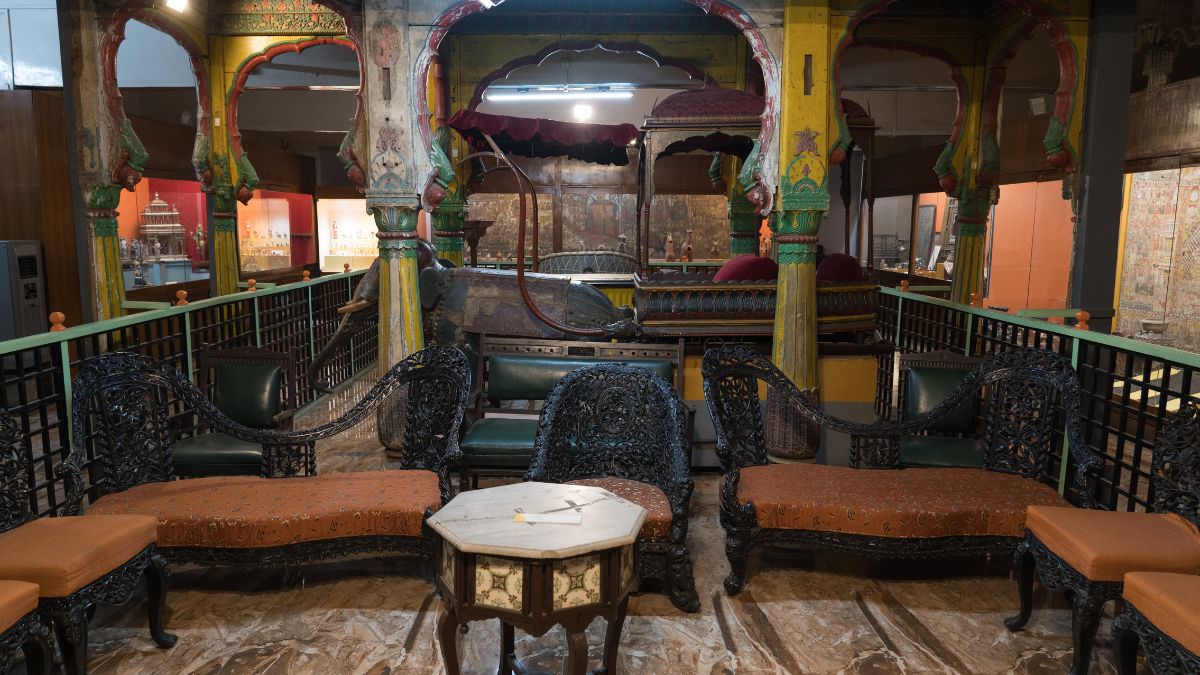
Kelkar Museum Pune has a problem that the best museums sometimes have: it contains so much that visitors move through too quickly, seeing the collection but not seeing it. A visitor who spends 45 minutes at kelkar museum pune things to see has technically visited. A visitor who spends 2.5 hours has had an entirely different experience — because the objects in this museum reward sustained attention in a way that the first glance never reveals.
This guide focuses specifically on the kelkar museum pune things to see that most visitors walk right past — the objects that are either not prominently labelled, located in corners that the natural visitor flow bypasses, or simply not dramatic enough at first glance to make people stop. All twelve of them are worth stopping for. Several of them are extraordinary.
Why Most Visitors See Only 40% of Kelkar Museum Pune
The layout of kelkar museum pune across three floors with narrow display corridors and dense case arrangements creates a natural tendency to move in one direction and keep moving. There is no single obvious centrepiece that anchors visitors in one place; instead, the collection rewards the kind of lateral, looping attention that most visitors — particularly those on group tours with time constraints — cannot give it.
The result is that the lamp collection, the Mastani Mahal ceiling, the betel-nut cutter collection, and the Vanita Kaksha are seen by fewer than a third of visitors despite being among the finest things in the museum. The crocodile armour gets thirty seconds instead of five minutes. The carved doors section is often skipped entirely. The children’s toy collection, which is historically extraordinary, is almost never mentioned in visitor accounts.
What follows are the twelve kelkar museum pune things to see that most visitors miss — with specific instructions on where to find each one and what to look for when you do.
Hidden Gem 1: The Mastani Mahal Ceiling — Look UP
Location: Second floor, Mastani Mahal room
What most people do: Look at the carved teak walls and door frames, take a photograph of the room, move on
What they miss: The ceiling
The Mastani Mahal is consistently mentioned as one of the kelkar museum pune things to see, but the ceiling — the most technically accomplished piece of carving in the room — is missed by the majority of visitors because human beings instinctively look at walls, not ceilings, when they enter a room. The Mastani Mahal ceiling consists of deeply carved geometric and floral patterns in original 18th-century teak that Dr. Kelkar salvaged from a Peshwa-era building in Kothrud before its demolition.
Stand in the centre of the room. Tilt your head back. The ceiling is directly above you and is the reason to photograph this room if you have the photography permit. The carving quality visible from directly below is significantly finer than anything visible at eye level.
Hidden Gem 2: The Crocodile Skin and Fish Scale Armour — Get Close
Location: Ground floor, weapons and armour section
What most people do: Note it from a distance, take a photograph, move on in 30 seconds
What they miss: The articulation of the individual scales and the construction methodology
The suit of armour assembled from crocodile leather and fish scales is one of the most unusual objects in any museum in India and one of the most significant kelkar museum pune things to see — but its significance is not visible from the standard viewing distance. The individual crocodile scale sections are articulated — jointed so they flex with the wearer’s movement — and the construction of the joints represents a specific craft solution to a specific problem: how to make armour from a material that is rigid in large sections but needs to accommodate human movement.
Approach the case and look at the articulation points — the areas between the scale sections where the individual pieces are connected. This is the extraordinary engineering detail that a quick glance misses entirely.
Hidden Gem 3: The 2,000-Lamp Collection — Walk Slowly
Location: First floor, lamp gallery
What most people do: Walk along the display cases at a steady pace, appreciate the variety, move on
What they miss: The individual lamps that are miniature sculptures in their own right
The lamp collection at kelkar museum pune is the largest and most diverse collection of Indian oil lamps in any single museum. What gets lost in the overall impression of 2,000 lamps is the detail of individual pieces. Stop at specific cases and look closely at the animal-form lamps — the ones cast in the shape of animals, birds, and mythological figures where the lamp wick holder is the creature’s open mouth or upraised tail. These are, individually, extraordinary small sculptures that happen to also function as lamps.
The Kerala nilavilakku standing lamps at the end of the gallery — tall, multi-tiered brass standing lamps used in temple worship — are the grandest pieces in the collection and worth finding before you leave the floor.
Hidden Gem 4: The Betel-Nut Cutter (Sarota) Collection
Location: First floor, domestic objects section
What most people do: Not notice it at all
What they miss: Miniature sculpture disguised as a kitchen implement
The sarota — the hinged blade used to cut areca nut (betel nut) for paan — appears, from a description, to be an unremarkable household tool. Dr. Kelkar’s collection of hundreds of sarotas from across India reveals something entirely different. Every regional tradition in India produced its own aesthetic for this implement: Bengali sarotas in the form of fish, Rajasthani sarotas in the form of birds and camels, South Indian sarotas with elaborate silver filigree handles, Maharashtrian sarotas with simple geometric iron forms. The range of design solutions to one simple functional problem, assembled in one display case, is one of the most concisely educational things in kelkar museum pune.
Find the sarota case — it is typically in the domestic objects section of the first floor. Walk slowly along it. The detail in the smaller pieces requires close attention.
Hidden Gem 5: The Vanita Kaksha (Women’s Quarter)
Location: First floor, women’s section
What most people do: Pass through briefly
What they miss: The intimacy of the domestic objects
The Vanita Kaksha is a display of personal objects from the domestic lives of royal and upper-class women in Peshwa-era Maharashtra: ivory combs with carved handles, sindoor containers (the vermilion holders used in Hindu married women’s daily ritual), hand mirrors with silver frames, kajal (kohl) boxes in carved wood and silver, jewellery storage cases, and the small perfume containers and paan accessories that made up the daily material environment of a 18th-century woman’s private space.
These are among the most personal objects in kelkar museum pune — not weapons or ceremonial pieces but the things that were touched every day by specific women whose names are not recorded but whose aesthetic preferences are visible in the objects they chose or had made for them. The Vanita Kaksha repays slow attention.
Hidden Gem 6: Carved Doors From Four States
Location: Various floors — look for free-standing carved door frames
What most people do: Walk through or around them
What they miss: The geographical range and regional variation in carving tradition
Dr. Kelkar salvaged carved wooden doors and door frames from demolition-threatened buildings across India — from Karnataka, Rajasthan, Kerala, and Gujarat as well as Maharashtra. These doors are displayed as architectural fragments, often free-standing or incorporated into wall displays, and they constitute one of the most geographically diverse collections of Indian woodcraft in any museum.
The difference between Rajasthani door carving (geometric, mathematical in its precision) and Kerala door carving (organic, plant-form, deeper relief) and Karnataka door carving (figurative, narrative panels depicting mythological scenes) is visible in direct comparison at kelkar museum pune in a way that photographs in books cannot convey. This is among the kelkar museum pune things to see that deserves 15 minutes of genuinely comparative attention.
Hidden Gem 7: The Chitrakathi Paintings of Maharashtra
Location: Upper floors, folk art section
What most people do: Not identify them as distinct from other paintings
What they miss: One of Maharashtra’s most distinctive folk art traditions
Chitrakathi painting is a storytelling art form from the Thakar community of Palghar district in Maharashtra — narrative paintings on paper using natural pigments, depicting episodes from Hindu mythology in a style that is immediately recognisable once you know what to look for: flat perspective, bold outlines in black, specific colour conventions (red for specific emotions, white for specific characters), and a compositional approach derived from oral storytelling rather than pictorial convention.
The Chitrakathi collection at kelkar museum pune includes some of the finest surviving examples of this tradition from the 19th and early 20th centuries. Most visitors walk past them without identifying them as Chitrakathi — they look, at first glance, like simply “old Indian paintings.” Pause at the label and then look at the paintings again with the storytelling logic in mind.
Hidden Gem 8: The Mughal-Era Ivory Carving
Location: Second floor, special collection
What most people do: Look at it briefly
What they miss: The scale of the craft achievement visible only at close range
The ivory carving collection includes pieces from the Mughal imperial workshop tradition — a standard of craft that was, in its time, the finest in the world. The miniature quality of the carving in these pieces — the number of individual cut lines visible per centimetre of surface, the undercutting that gives the figures their three-dimensionality — is not visible at the distance most visitors view them. Use the glass case as close as possible and look at the surface detail.
Hidden Gem 9: Children’s Toys From 200 Years Ago
Location: First floor, domestic section
What most people do: Not realise what they are
What they miss: The continuity between 19th-century Indian children’s play and contemporary children’s play
The toy collection at kelkar museum pune includes clay animals, wooden vehicles, fabric dolls, and mechanical toys from the 17th to 19th centuries from across India. What is striking about this collection as one of the kelkar museum pune things to see is not its age but its familiarity — the clay elephant on wheels, the wooden spinning top, the fabric doll with embroidered features are all recognisable as toys even 200 years later. The specific forms have changed; the objects have not. This is one of the most quietly moving things in the museum.
Hidden Gem 10: The Mechanical Ritual Vessels (Gurulas)
Location: Ground floor and first floor, ritual objects
What most people do: Not notice the mechanical element
What they miss: 18th-century Indian engineering in a religious context
The Gurula vessels — ritual objects used in specific temple ceremonies — include several examples in the kelkar museum pune collection that have mechanical elements: hinged panels that open to reveal interior spaces, counterbalanced lids that remain level as the vessel is tilted, and interlocking components that lock and unlock through specific hand movements. These are examples of precision engineering applied to ritual function — the kind of object that reveals, when you understand what you are looking at, the sophistication of the craft tradition that produced it.
Hidden Gem 11: Dr. Kelkar’s Own Portrait — Pause Here First
Location: Near the museum entrance, ground floor
What most people do: Walk past it on the way to the displays
What they miss: The context that makes everything else meaningful
Before you look at any of the 2,500+ objects on display, stop at Dr. Dinkar Kelkar’s portrait near the museum entrance. The portrait shows a man in his later years — quietly dressed, not imposing, not grand. Every single thing you are about to see was collected by this person, carried home from trips across India, maintained for decades, and eventually given away to the public.
Knowing the face of the collector before you encounter the collection changes how you receive it. The 2,000 lamps are no longer an institution’s acquisition — they are one man’s sixty-year obsession. The Mastani Mahal panels are what one person decided was worth saving from demolition. Pause at the portrait first. It takes 30 seconds and reframes the next two hours.
Hidden Gem 12: The Museum’s Own Building — Look at the Exterior
Location: Before you enter
What most people do: Enter immediately
What they miss: A significant piece of heritage architecture in its own right
The building that houses kelkar museum pune on Bajirao Road is itself a significant 19th-century structure — a large Pune wada (courtyard house) with carved wooden pillars at the entrance and a facade that reflects the domestic architectural tradition of prosperous Peshwa-era Pune. Before entering, step back and look at the building from the road. The entrance pillars and the upper-floor woodwork are worth a photograph before you go inside to photograph the collection within.
Practical Tips for Seeing These Hidden Gems
- Buy the photography permit (₹100): The Mastani Mahal ceiling, the lamp collection detail, and the ivory carving are all worth photographing. The ₹100 permit covers the entire visit.
- Go on a weekday morning at 9:30 AM: The first hour after opening gives you all twelve of these kelkar museum pune things to see without navigating around other visitors in the narrower display sections.
- Allow 2.5 hours minimum: You cannot see these twelve things properly in less time while also seeing the rest of the collection.
- Ask the gallery attendants: The museum’s floor staff know the collection well and can direct you to specific pieces if you describe what you are looking for. They are underused as a resource.
Frequently Asked Questions
What is the most important thing to see at Kelkar Museum Pune?
The Mastani Mahal on the second floor — specifically the ceiling. The 2,000-lamp collection and the crocodile skin armour are the next most significant kelkar museum pune things to see.
How long should I spend at Kelkar Museum Pune?
Minimum 2 hours for a thorough visit. 2.5 to 3 hours to give the twelve hidden gems the attention they deserve.
Is there a guide available at Kelkar Museum Pune?
Guided tours can be arranged through the museum administration — inquire at the ticket counter. A guide significantly improves the experience of the kelkar museum pune things to see that are not obviously labelled.
Explore More:
1 thought on “Kelkar Museum Pune Things to See — 12 Hidden Gems Most Visitors Walk Right Past”