
Before the climb, people talk about sinhagad fort food the way they talk about a destination. Not “we should eat something at the top” — but “we’re going to Sinhagad for the pitla bhakri.” The food has become as inseparable from the sinhagad fort experience as the trek itself, and for good reason: eating pitla bhakri in a cloud at 1,312 metres, with the Sahyadri valleys disappearing below you and a kulhad of cold dahi in your hand, is a specific combination that cannot be replicated anywhere else in Maharashtra.
This guide covers everything about sinhagad fort food: what pitla bhakri actually is (for those who have not had it), where the best stalls are at the summit, what everything costs in 2026, the monsoon-specific food experience, and what vegetarian options are available for those who want to know before they climb.
Sinhagad Fort Food — What You Will Find at the Summit
The sinhagad fort food stalls are clustered at the summit plateau, concentrated near the fort entrance gate and along the main path through the fort complex. There are typically 15 to 25 active stalls on any given day, operated by local families from the surrounding villages who have been running food businesses at the fort for generations.
The range of sinhagad fort food available:
- Pitla Bhakri — the signature dish, always available
- Kulhad Dahi — cold yoghurt in unglazed clay cup
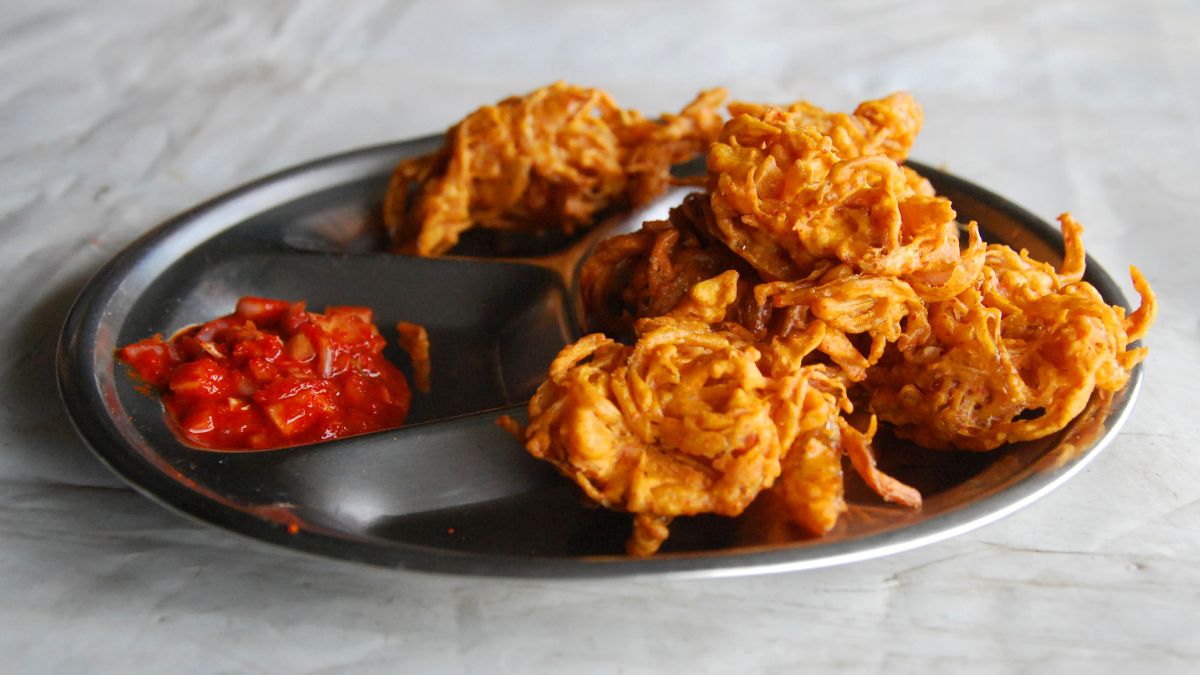
- Kanda Bhaji — onion fritters, peak season monsoon
- Solkadhi — kokum and coconut milk digestive drink
- Bhakri with thecha — flatbread with crushed chilli-garlic condiment
- Chai — strong, freshly brewed, always hot
- Bhutta (corn) — roasted on charcoal, lime and masala
- Packaged snacks — biscuits, chips, instant noodles for the less adventurous
All sinhagad fort food is vegetarian — there is no non-vegetarian food available at the summit stalls. The food system at Sinhagad has always been entirely plant-based, which aligns with the traditional dietary patterns of the Maharashtrian communities who operate the stalls.
Pitla Bhakri — The Definitive Sinhagad Fort Food
Pitla bhakri is not a Sinhagad invention — it is a classic Maharashtrian village food, the staple meal of agricultural communities across the Western Ghats. But the version you eat at sinhagad fort food stalls at the summit of a 1,312-metre mountain, after a steep climb, with the valley below you and Sahyadri mist around you, has become its own specific culinary experience.
What Is Pitla?
Pitla is a thick preparation made from besan — gram flour (ground chickpea flour) — cooked with water, oil, and a specific spice combination. The cooking process involves toasting the besan in oil first, then adding water gradually while stirring continuously, creating a thick, porridge-like consistency. The spice base includes mustard seeds, curry leaves, green chillies, turmeric, asafoetida, and typically raw onion or garlic — the exact combination varies by stall, which is why experienced Sinhagad visitors have preferences about which stall’s pitla they prefer.
The texture of correctly made pitla is firm enough to hold shape when scooped with the bhakri but soft enough to coat the bread completely. It should be visibly glossy from the oil, strongly aromatic from the tempering, and have a subtle earthiness from the besan itself.
What Is Bhakri?
Bhakri is a flatbread made from jowar (sorghum) flour — thicker and coarser than wheat roti, with a slightly gritty texture from the coarser grind of the jowar. It is made without yeast or leavening, cooked directly on a flat iron tawa over fire, and should have a light char on the surface while remaining soft inside. A bhakri that bends without cracking has been made correctly — one that snaps or crumbles is either overcooked or made with too little water in the dough.
The jowar bhakri provides more sustained energy than wheat roti — relevant context for a summit sinhagad fort food experience where the descending trail still lies ahead.
How Pitla Bhakri Is Served at Sinhagad
A full plate of sinhagad fort food pitla bhakri arrives as two or three bhakri, a generous portion of pitla, a raw onion cut in quarters, a wedge of lime, and sometimes a small portion of thecha (crushed green chilli and garlic paste). The eating method: tear a piece of bhakri, scoop the pitla, add raw onion and a squeeze of lime, eat. The raw onion is not optional as a flavour component — it cuts the richness of the besan pitla and provides the crunch that completes the combination.
Price of Pitla Bhakri at Sinhagad 2026
₹100 to ₹150 per full plate at most sinhagad fort food stalls. Prices vary slightly between stalls and have been gradually increasing over recent years as the fort’s popularity and visitor numbers have grown. The price is fixed by informal consensus among the stall operators rather than by any official price control.
Kulhad Dahi — The Perfect Companion
The kulhad dahi at sinhagad fort food stalls is served in an unglazed terracotta cup — the same clay cup type used across rural Maharashtra for yoghurt and lassi. The dahi itself is thick, cold, and slightly sour from the fermentation — made from whole milk with a high fat content that gives it a richness that low-fat commercial yoghurt cannot match.
The clay kulhad is not merely traditional packaging. The unglazed terracotta is slightly porous, and the evaporation through the walls of the cup keeps the contents marginally cooler than the ambient temperature — a physical property that was the original reason for the kulhad’s use. After climbing to 1,312 metres in the Maharashtrian heat, the additional cooling effect of a properly made kulhad is perceptible and welcome.
After drinking, the kulhad is typically crushed and left — the terracotta is biodegradable and returns to the soil. This is the environmentally sound element of sinhagad fort food packaging that plastic alternatives cannot match. Some environmental awareness campaigns at the fort have specifically promoted the kulhad system as the sustainable food service model for mountain tourism in Maharashtra.
Price: ₹30 to ₹50 per kulhad dahi.
Kanda Bhaji — The Monsoon Sinhagad Fort Food
Kanda bhaji — onion fritters made by dipping sliced raw onion in a spiced besan batter and frying in hot oil — are available year-round at sinhagad fort food stalls but are the defining monsoon food at the summit. The reason is atmospheric rather than logical: eating hot, crispy, oily onion fritters while mist swirls through the fort ramparts and the valley below is invisible in the cloud is an experience that warm weather cannot replicate.
Good kanda bhaji at sinhagad fort food stalls have a thin, crispy batter that shatters when bitten — the onion inside should be soft and sweet from the heat, not raw. A thick, doughy batter coating is a sign of poor proportions; the besan batter should be just enough to hold the onion slices together. They are served with a thin green coriander-chilli chutney.
Best time for kanda bhaji: Immediately after the fryer produces a fresh batch — they deteriorate quickly and the stall that is actively frying is always preferable to the one with a tray of bhaji sitting and cooling.
Price: ₹60 to ₹100 per plate (approximately 8 to 10 fritters).
Solkadhi — The Pink Drink You Should Try
Solkadhi is a digestive drink from the Konkan coast — made from kokum (a sour dried fruit from the Garcinia tree) and coconut milk, thin in consistency, pale pink to deep pink in colour depending on the kokum concentration, sour, cooling, and genuinely refreshing after spiced sinhagad fort food.
It is not universally available at sinhagad fort food stalls — some stalls carry it and some do not. Ask specifically if you want it. The best version at the summit is made fresh rather than from a concentrate, with visible coconut milk swirling through the pink kokum base and a light salting that enhances the sourness.
Solkadhi works specifically as a digestive in the way lassi or buttermilk does — the combination of the acidic kokum and the fat of the coconut milk helps process the rich, oily pitla bhakri and kanda bhaji. Drinking it after the meal rather than during is the traditional sequence.
Price: ₹30 to ₹60 per glass.
Chai at Sinhagad — Strong, Always Hot
The chai at sinhagad fort food stalls is the Maharashtrian cutting chai style — strongly brewed, high milk-to-water ratio, heavily sweetened, served in a small glass that holds approximately 150ml. It is made on a small gas burner or wood fire at the stall, arrives genuinely hot, and costs ₹15 to ₹25 per glass.
The morning chai at the summit — drunk after the climb, before the pitla bhakri, while the valley mist is still in the air — is one of the most satisfying small experiences available at sinhagad fort food stalls. There is a specific quality to chai at altitude, freshly made, after physical effort, that the same tea in a Pune café cannot match.
Which Sinhagad Fort Food Stalls Are the Best?
Sinhagad fort food stall quality varies, and regulars have strong opinions about which stalls to use. Rather than naming specific stalls — which change hands, change quality, and open and close seasonally — these are the indicators of a good pitla bhakri stall at the summit:
- High turnover: The stall with the most customers at any given time is producing the freshest food. Volume is quality assurance in sinhagad fort food.
- Bhakri made to order: The best pitla bhakri at Sinhagad comes from stalls where the bhakri is made fresh for each order — you can see it being patted out and placed on the tawa. Stalls serving bhakri from a pre-made stack are offering older, drier bread.
- Hot pitla: The pitla should arrive steaming. Cold or room-temperature pitla has been sitting too long.
- Active oil in the kanda bhaji fryer: If you are ordering bhaji, the fryer oil should be at full temperature — active bubbling when food is added, not sluggish and dark.
Vegetarian Options at Sinhagad Fort Food Stalls
All sinhagad fort food is vegetarian — there are no non-vegetarian items at any of the summit stalls. This is standard and consistent across the entire fort food economy. Visitors with specific dietary requirements:
- Vegan: Pitla bhakri without dahi is fully vegan — the pitla is made from besan, water, oil, and spices with no dairy. Kulhad dahi obviously contains dairy. Kanda bhaji batter is typically dairy-free. Chai contains milk and is not vegan.
- Gluten-free: Jowar bhakri is made from sorghum flour and is naturally gluten-free. Besan (gram flour) is also gluten-free. Confirm with the stall if you have celiac or severe gluten sensitivity as some stalls may use shared equipment.
- Jain dietary requirements: The raw onion served with pitla bhakri is an issue for Jain visitors who avoid root vegetables — ask for it to be omitted. The besan pitla itself is typically acceptable within Jain dietary guidelines, though confirm the specific spice use with the stall.
Prices at Sinhagad Fort Food Stalls — 2026 Reference
| Item | Price Range | Availability |
|---|---|---|
| Pitla Bhakri (full plate) | ₹100 – ₹150 | All stalls, all year |
| Kulhad Dahi | ₹30 – ₹50 | Most stalls, all year |
| Kanda Bhaji (plate) | ₹60 – ₹100 | Most stalls, peak monsoon |
| Solkadhi (glass) | ₹30 – ₹60 | Select stalls |
| Chai (glass) | ₹15 – ₹25 | All stalls |
| Bhutta (roasted corn) | ₹25 – ₹40 | Most stalls |
| Packaged biscuits/snacks | ₹10 – ₹30 | All stalls |
Cash only: UPI connectivity at the sinhagad fort food summit stalls is unreliable. Carry cash — at minimum ₹300 per person to cover a full sinhagad fort food experience (pitla bhakri + kulhad dahi + chai + bhaji).
Frequently Asked Questions About Sinhagad Fort Food
What is the famous food at Sinhagad Fort?
Pitla bhakri — gram flour preparation served with jowar flatbread, raw onion, lime, and thecha. It is inseparable from the sinhagad fort food identity and the primary reason many visitors specifically choose to eat at the summit rather than before the trek.
How much does food cost at Sinhagad Fort top?
Pitla bhakri ₹100–150. Kulhad dahi ₹30–50. Kanda bhaji ₹60–100. Chai ₹15–25. Full sinhagad fort food experience for one person: approximately ₹200–300.
Is sinhagad fort food vegetarian?
Yes — all sinhagad fort food stalls serve exclusively vegetarian food. No non-vegetarian items are available at the summit.
What time do the food stalls open at Sinhagad Fort?
The sinhagad fort food stalls begin operating from approximately 6:30 AM to 7:00 AM — shortly after the fort opens at 5:00 AM. The stalls are most active between 9:00 AM and 2:00 PM. After 3:00 PM, stock begins to run down and some stalls close for the day.
Should I carry cash to Sinhagad Fort?
Yes — UPI connectivity at the summit is unreliable. Carry minimum ₹300 per person in cash for sinhagad fort food. The entry fee (₹10) is also cash-only.
Explore More:
1 thought on “Sinhagad Fort Food — Pitla Bhakri, Kulhad Dahi, Kanda Bhaji and Best Stalls at the Top”