
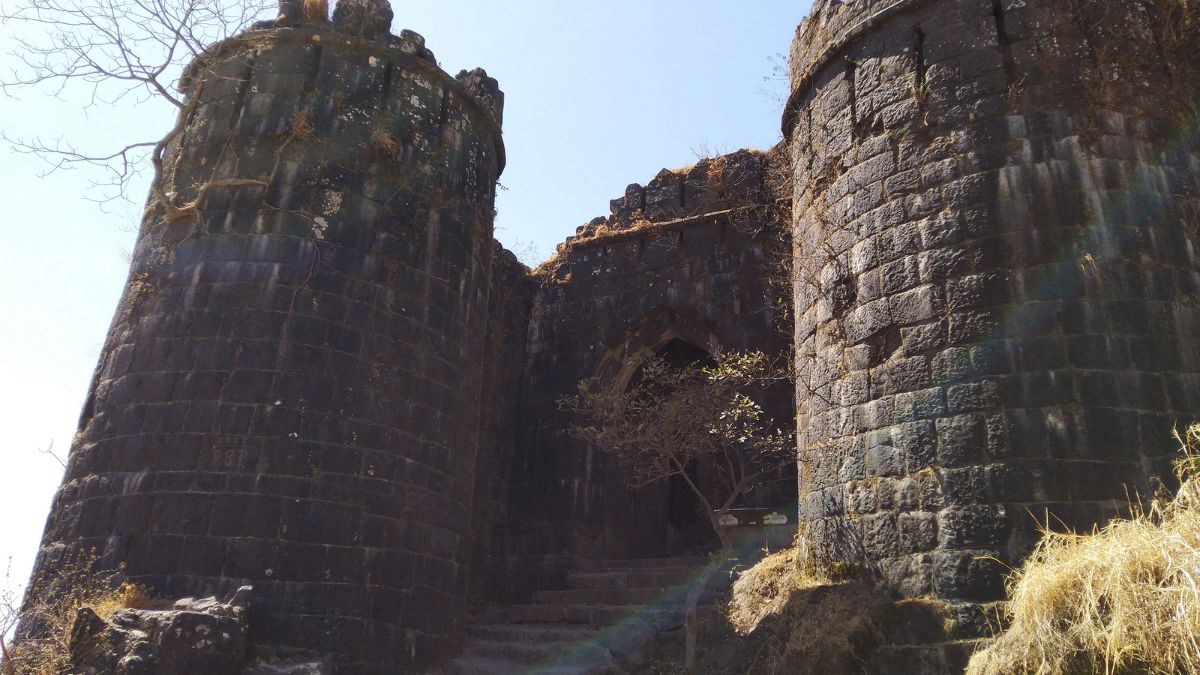
The sinhagad fort trek is the most popular trek in Maharashtra and one of the most accessible serious climbs anywhere in India. In a single morning, you can leave Pune city, drive 35 kilometres to the base, complete the sinhagad fort trek to a 1,312-metre summit, eat pitla bhakri with kulhad dahi in a cloud, and be back in Pune for lunch. No overnight camping, no guide requirement, no technical equipment. Just a hill with genuine history at the top and a route that has been walked for 350 years.
But the sinhagad fort trek is not one route — it is two, with genuinely different characters, different difficulty levels, and different suitability for different kinds of visitors. Choosing between them before you arrive saves you from starting the wrong route and realising only partway up. This guide compares both sinhagad fort trek routes honestly, covers the monsoon-specific information that most guides understate, and tells you exactly what to carry for each season.
Sinhagad Fort Trek — Overview Before You Choose
| Feature | Donje Route (Main Trek) | Kalyan Darwaza Route (Jeep Track) |
|---|---|---|
| Distance | 2.7 km base to summit | ~6 km base to summit |
| Elevation Gain | ~400 metres | ~400 metres (gradual) |
| Difficulty | Moderate — steep rocky sections | Easy — gradual gravel road |
| Time Up (average adult) | 45–75 minutes | 90–120 minutes |
| Time Down | 35–55 minutes | 70–90 minutes |
| Path Surface | Rocky, uneven, stepped sections | Gravel and dirt vehicle road |
| Monsoon | Slippery — care required | Generally manageable |
| Jeep Service Available | No | Yes — ₹200–300/person shared |
| Best For | Fit adults, experienced walkers | Families, seniors, first-timers |
| Historical Significance | The route used in 1670 assault | Traditional fort access road |
Sinhagad Fort Trek Route 1 — The Donje Route (Main Trek Path)
The Donje route is the traditional sinhagad fort trek — the path that has been climbed by soldiers, pilgrims, farmers, and weekend trekkers for centuries. When people say “the Sinhagad trek,” this is almost always what they mean.
The Route Step by Step
The Donje sinhagad fort trek begins at the Donje village trailhead, at the northern base of the fort. There is a small parking area here and usually tea and snack stalls operating from early morning. The path begins as a wide dirt track and narrows progressively as the gradient increases.
First 800 metres: Relatively gentle. The path climbs through scrub forest with occasional large boulders. The vegetation is dense in monsoon and dry season gives clearer sight lines. This section of the sinhagad fort trek is suitable for warming up — do not push the pace here.
Middle section (800m to 1.8km): The gradient increases significantly. The path becomes rocky and requires attention to foot placement. There are stepped sections carved from the natural rock face that are steep enough that some visitors use their hands for balance. This is where the sinhagad fort trek reveals its genuine difficulty — not technical climbing, but sustained steep effort that tests cardiovascular fitness and leg strength.
Upper section (1.8km to summit): The path steepens further before levelling off as it approaches the fort entrance. Fixed iron ropes or chains have been installed at the most challenging sections to assist climbers. The final approach to the fort gate is the steepest single section of the entire Donje sinhagad fort trek.
What You See Along the Donje Route
The Donje sinhagad fort trek passes through the section of the cliff face that Tanaji Malusare’s soldiers scaled in the 1670 night assault. Looking at the rock face on the upper section of the route — particularly in daylight, with good shoes, and with both hands available if needed — gives a visceral sense of what that assault in darkness, with the element of surprise as the only tactical advantage, actually involved.
The view opens progressively from the middle section onward. By the time you reach the upper section of the Donje sinhagad fort trek, the Pune valley is spread below you and the Sahyadri foothills are visible to the west — on clear days, the panorama extends for 50 to 60 kilometres.
Sinhagad Fort Trek Route 2 — The Kalyan Darwaza Route (Jeep Track)
The Kalyan Darwaza route approaches sinhagad fort pune from the southwest, following a wider vehicle track that was historically used for supplying the fort and is today used by the jeep service that shuttles visitors to the summit.
The Route Character
The Kalyan Darwaza sinhagad fort trek is a gradual ascent on a gravel and dirt road approximately 6 kilometres long. The gradient is consistent and manageable — there are no sections that require hand support, and the surface underfoot is more forgiving than the Donje route’s rock faces. For families with children who are enthusiastic walkers but not experienced trekkers, this is the appropriate sinhagad fort trek choice.
The road curves around the southern and western faces of the fort, offering different perspectives on the rock formation than the Donje route provides. The vegetation along the Kalyan Darwaza route is different too — more open in sections, with longer sight lines and more exposure to the valley views on the western side.
The Jeep Service on the Kalyan Darwaza Route
Shared jeep services (Mahindra Bolero or similar) operate on the Kalyan Darwaza route, taking passengers from the base to the fort entrance at approximately ₹200 to ₹300 per person for a shared vehicle or ₹1,000 to ₹1,500 for a private jeep. The service runs from early morning until the fort closes at 6:00 PM.
The jeep service is the practical option for senior visitors, visitors with mobility limitations, families with very young children, and anyone who wants to experience the fort’s summit without the physical demands of the sinhagad fort trek. There is no stigma in choosing the jeep — the historical significance and the food at the top are identical regardless of how you arrived.
Sinhagad Fort Trek Difficulty — Honest Rating
Most people searching “sinhagad fort trek difficulty” want an honest answer rather than reassurance. Here it is:
| Visitor Type | Donje Route | Kalyan Route |
|---|---|---|
| Fit adults who walk/exercise regularly | Manageable — 45-60 min up | Easy |
| Adults without regular exercise | Challenging — 75-90 min, rest needed | Manageable — 90-120 min |
| Children aged 10-15 (active) | Doable with encouragement | Easy |
| Children aged 6-9 | Not recommended | Manageable with jeep option |
| Children under 6 | Not suitable | Jeep service only |
| Senior visitors (60+) | Not recommended | Jeep service recommended |
| Visitors with knee problems | Not recommended (descent is harder) | Jeep service |
The descent on the Donje sinhagad fort trek is harder on the knees than the ascent. This catches many visitors by surprise — going up feels like the challenge, but coming down the steep rocky sections with legs already tired from the climb puts significant stress on knee joints. If your knees are a concern, consider going up via Donje and coming down via the Kalyan jeep track.
Sinhagad Fort Trek in Monsoon — The Most Honest Guide You Will Find
The sinhagad fort trek in monsoon is simultaneously the most spectacular version of the experience and the one that requires the most preparation. The Sahyadri hills in full monsoon — vivid green, cloud-wrapped, with waterfalls appearing on rock faces that are dry for nine months of the year — are simply beautiful in a way that no photograph adequately communicates. The same conditions also make the Donje route significantly more challenging and the leech situation genuinely significant if you are unprepared.
Path Conditions During Monsoon
During and after rainfall, the rock sections of the Donje sinhagad fort trek become slippery. The moss that grows on the rock faces during monsoon season reduces grip dramatically. The stepped sections near the summit — challenging enough in dry conditions — become genuinely technical in wet conditions.
This does not mean the monsoon sinhagad fort trek is not worth doing — it means it requires the right footwear and the right attitude. Rubber-soled shoes with aggressive tread are essential. Smooth-soled sports shoes or any kind of fashion footwear will result in slipping. Trekking sandals are adequate for light monsoon conditions; proper trekking shoes with ankle support are the right choice for serious monsoon visits.
Move slowly on the wet sections. Take each step with full weight before committing to the next. The Donje sinhagad fort trek in monsoon is not a place for the pace you might maintain on a dry day.
Leeches — The Complete Guide
Leeches are a reality of the monsoon sinhagad fort trek and the subject of more anxiety than they deserve — with the right preparation, they are an inconvenience rather than a problem.
Leeches on the Donje sinhagad fort trek are primarily encountered in the lower and middle sections, in the areas of dense vegetation that the path passes through. They drop from leaves or emerge from the soil and attach to any exposed skin or fabric surface they contact. They move quickly and attach before most people feel them.
Prevention:
- Wear full-length trousers tucked into your socks. This blocks the most common entry point (between shoe and trouser leg).
- Leech socks (thick cotton or wool socks worn over trouser legs) are available at shops near the sinhagad fort trek base in monsoon season. They are worth buying if you do not have suitable clothing.
- Apply salt solution or mosquito repellent to your shoes and sock exteriors before beginning the trek. Leeches avoid salt.
If a leech attaches:
- Do not pull it off. The head will remain embedded and can cause infection.
- Apply salt, salt water, or hand sanitiser directly to the leech. It will release and fall off within 20 to 30 seconds.
- The bite will bleed more than seems reasonable — leeches inject an anticoagulant. This is normal. Apply pressure with a clean cloth for 5 minutes.
- The total blood lost to a leech bite is medically insignificant — less than a blood test. The discomfort is psychological rather than physical.
Carry a small container of table salt in a zip-lock bag in your pocket during the monsoon sinhagad fort trek. This is the single most useful piece of preparation for the leech situation.
Monsoon Visibility and Cloud
During heavy monsoon, the summit of sinhagad fort pune can be completely enveloped in cloud — visibility dropping to 10 to 20 metres. This is beautiful and atmospheric but means the panoramic views are unavailable. The compensation is the texture of the fort in mist and cloud, which has its own quality entirely different from the clear-day experience.
Do not begin the Donje sinhagad fort trek during active heavy rainfall. Wait for a break in the rain and then move — the post-rain period, when the clouds thin and mist rises from the valley, is often the most photographically spectacular moment of a monsoon visit.
What to Carry for the Sinhagad Fort Trek
Year-Round Essentials
- Water: Minimum 1 litre per person for the trek up. 1.5 litres in summer. Water is available at stalls at the summit but not on the route itself.
- Proper footwear: Closed-toe shoes with rubber soles and grip. This is the most important item on the list — everything else is secondary.
- Snacks: Bananas, glucose biscuits, dry fruit for energy during the ascent.
- Small daypack: Keeps hands free for the steep sections where balance matters.
- Cash: UPI connectivity at the summit is unreliable. Food stalls and the entry fee both require cash.
- Sun protection: Hat and sunscreen for the exposed upper sections — the summit is exposed to direct sun in clear conditions.
Monsoon Additions
- Raincoat or waterproof jacket (umbrella impractical on steep sections)
- Full-length trousers tucked into socks, or leech socks from the base
- Salt in a zip-lock bag for leech management
- Waterproof bag for phone and documents
- Change of clothing for after the trek
- Microfibre towel
Winter / Summer Variations
- Winter (Oct–Feb): Light jacket for the summit where temperatures are noticeably cooler than Pune city, particularly before 9:00 AM
- Summer (Mar–May): Extra water — 2 litres minimum — and avoid the trek between 11:00 AM and 3:00 PM when the rock face is fully exposed to direct sun and temperatures at the summit can exceed 35°C
Safety Tips for Sinhagad Fort Trek
- Start early. The 6:00 AM to 9:00 AM window gives you the best conditions on the Donje route — cooler temperatures, better light, less crowding on the narrow path sections.
- Never attempt the Donje route after dark without specific experience of the route and appropriate lighting. The rock sections that require careful foot placement in daylight are genuinely hazardous at night.
- Tell someone your plan. Mobile connectivity on the lower sections of the Donje sinhagad fort trek is limited — inform a contact of your expected return time before beginning.
- The descent takes more care than the ascent on Donje. More sinhagad fort trek injuries happen on descent than ascent. Slow down on the way down, particularly on the stepped sections.
- Respect the monsoon warning system. If local authorities or fort management announce restrictions during extreme monsoon conditions, these restrictions exist for documented reasons — rockslides and flash flooding in the ravines near the route are real seasonal hazards.
Frequently Asked Questions About Sinhagad Fort Trek
Which route is better for the Sinhagad Fort trek — Donje or Kalyan Darwaza?
Donje for fit adults who want the genuine trekking experience (2.7km, steep, 45–75 minutes). Kalyan Darwaza for families, seniors, or anyone who prefers a gradual ascent (6km, gentle, 90–120 minutes, jeep service available). You can go up one route and down the other — many visitors do exactly this.
How difficult is the Sinhagad Fort trek?
Donje route: moderate difficulty. Regularly exercising adults complete it in under an hour. People without regular exercise should allow 75–90 minutes and expect to rest at intervals. The descent on the Donje route is harder on the knees than the ascent.
Is Sinhagad Fort trek safe in monsoon?
Yes, with preparation: rubber-soled shoes with good grip, full-length trousers, salt for leeches, and avoiding the trek during active heavy rainfall. The route is significantly more slippery in wet conditions — move slowly and deliberately on the rock sections.
What is the best time to do the Sinhagad Fort trek?
6:00 AM to 9:00 AM for the best conditions year-round. October to February for clear summit views. July to September for the spectacular monsoon atmosphere. Avoid 11:00 AM to 3:00 PM in summer months.
Can children do the Sinhagad Fort trek?
Active children aged 10 and above can manage the Donje route with encouragement and appropriate footwear. Children aged 6 to 9 are better suited to the Kalyan Darwaza route. Children under 6 should use the jeep service on the Kalyan route.
How do I handle leeches on the Sinhagad Fort trek?
Prevention: full-length trousers tucked into socks, salt solution on footwear. Treatment if attached: apply salt or hand sanitiser — they release within 30 seconds. Do not pull them off. The bite is medically insignificant; the blood loss is minimal.
Explore More:
3 thoughts on “Sinhagad Fort Trek — Both Routes Compared (Donje vs Kalyan Darwaza, Difficulty, Monsoon Tips)”