
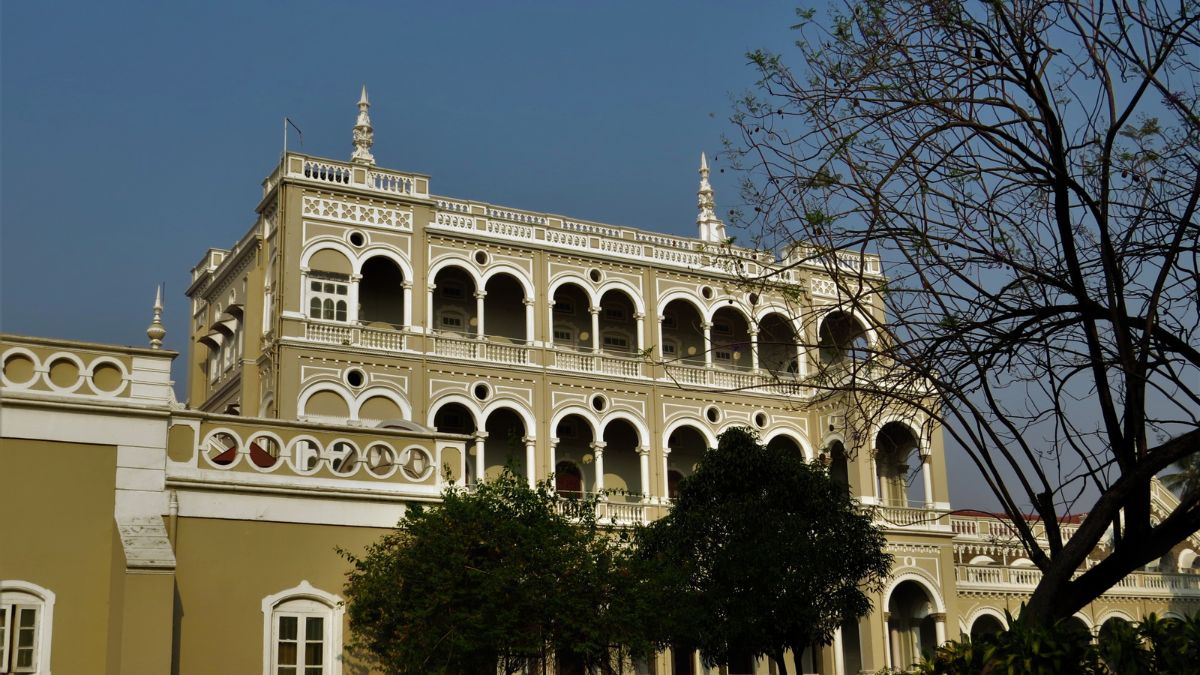
Aga Khan Palace Pune is one of those rare heritage sites where the architecture, the history, and the landscape are each individually significant — and together create an experience unlike anything else in Maharashtra. Built in 1892 as an act of charity during a famine, it became the site of Gandhi’s imprisonment during the Quit India Movement, where Kasturba Gandhi died in 1944 and Mahadevbhai Desai died five days after arrival. Today it is a national memorial in 19 acres of landscaped gardens, maintained by the Gandhi National Memorial Society.
This hub guide brings together everything on this site about aga khan palace: the complete visitor guide, the full history, the architecture and garden analysis, and the practical information for planning your visit.
Aga Khan Palace — Essential Facts
| Detail | Information |
|---|---|
| Address | Nagar Road, Yerwada, Pune – 411 006 |
| Phone | +91-20-2668-1747 |
| Timings | 9:00 AM to 5:30 PM daily |
| Weekly Closure | None — open all 7 days |
| Entry Fee (Indian adults) | ₹25 |
| Entry Fee (Foreign nationals) | ₹300 |
| Children under 15 | Free |
| Garden Area | 19 acres |
| Time needed | 1.5 to 2.5 hours |
| Maintained by | Gandhi National Memorial Society |
| Distance from Shaniwar Wada | 5 kilometres — 15 minutes auto |
| Distance from Pune Airport | 8 kilometres — 15–25 minutes |
The Story in Three Chapters
Chapter 1: 1892 — Built to End Hunger
Sultan Mohammed Shah Aga Khan III commissioned the palace to provide employment to famine-affected farmers and labourers in the Deccan. The construction of a large, elaborate palace was deliberate — grander buildings meant more craftspeople employed for longer. The Italian Renaissance facade, the 19-acre gardens, the teak-framed interiors: all of this was architecture as philanthropy.
Chapter 2: 1942–1944 — India’s Most Consequential Prison
On 10 August 1942, the morning after Gandhi’s Quit India Movement speech, the British government arrested Gandhi, Kasturba, Gandhi’s secretary Mahadevbhai Desai, and Sarojini Naidu, bringing them to aga khan palace under armed guard. Gandhi was 73. In the 21 months that followed: Mahadevbhai Desai died of cardiac arrest on 15 August 1942, five days after arrival. Kasturba Gandhi died of bronchial pneumonia on 22 February 1944, with her head in Gandhi’s lap. Gandhi was released on 6 May 1944, significantly weakened.
Chapter 3: 1969 — Gift to the Nation
Sultan Shah Karim Aga Khan IV gifted aga khan palace to the Indian nation in 1969. The Gandhi National Memorial Society was established to maintain it as a public memorial. The memorial rooms, the Kasturba Samadhi, and the Mahadevbhai Desai Samadhi in the garden have been maintained since.
Full history: Aga Khan Palace History — Gandhi, Kasturba and the Quit India Movement
What to See — Suggested Route
- The main facade from the garden approach: The five Italian arches on the main facade are best seen from 40–50 metres along the central path. Spend time here before entering — the building’s proportions are best understood from a distance.
- Gandhi memorial rooms (ground floor): Gandhi’s charkha, walking stick, personal objects, and the timeline panels. The Kasturba room — where she died — requires more time than the other rooms.
- Mahadevbhai Desai memorial: Often visited too briefly. Gandhi’s 25-year secretary died here at 50, five days after arrival.
- Kasturba Samadhi (gardens, southeast section): A marble platform beneath a tree in the garden. The quietest and most affecting spot at aga khan palace. Sit here for a few minutes.
- Full garden walk: 30–40 minutes around the 19-acre perimeter. The garden in the morning light is the architectural achievement that complements the building.
Full visitor guide: Aga Khan Palace Pune — Complete Visitor Guide 2026
The Architecture — Five Arches and 19 Acres
The aga khan palace architecture combines Italian Renaissance (five broad Corinthian-columned arches across the main facade) with Maharashtrian craftsmanship in the teak interior woodwork. The depth of the verandah behind the arches — deeper than typical European equivalents — is a practical response to Pune’s climate: the verandah shades the full facade width at almost any time of day. The 19-acre gardens follow a loose Mughal garden tradition with formal axial paths, planted sections, and the two samadhis as focal points in the landscape.
Full architecture guide: Aga Khan Palace Architecture — Italian Arches, Maharashtrian Craft and 19-Acre Garden Guide
How to Reach Aga Khan Palace Pune
- From Shaniwar Wada / Old Pune: 5 kilometres — auto-rickshaw 15–20 minutes, fare ₹80–120
- From Pune Junction Railway Station: 6 kilometres — auto 15–25 minutes, fare ₹80–130
- From Pune Airport: 8 kilometres — cab 15–25 minutes, fare ₹250–400
- By Pune Metro: Yerwada station on the Purple Line is approximately 1.2km from aga khan palace — short auto from station
- Parking: Available within the compound — more spacious than old city heritage sites
Combining Aga Khan Palace With Other Heritage Sites
Aga khan palace tells a 20th-century story (independence movement). Shaniwar Wada tells an 18th-century story (Maratha Empire). Together they give a visitor to Pune a far more complete picture of the city’s historical significance than either alone.
Suggested one-day combination:
- 8:00 AM: Shaniwar Wada (open from 8 AM, ₹25)
- 9:30 AM: Dagdusheth Ganpati (300m from fort, free)
- 10:00 AM: Kelkar Museum (18 min walk, ₹100)
- 12:30 PM: Lunch
- 2:00 PM: Auto to Aga Khan Palace (15–20 min)
- 2:30–5:00 PM: Aga Khan Palace complete visit
Full one-day plan: One Day in Pune — Complete Heritage Itinerary
All Aga Khan Palace Guides on This Site
- Aga Khan Palace Pune — Complete Visitor Guide (timings, entry fee, what to see, parking)
- Aga Khan Palace History (Gandhi, Kasturba, Mahadevbhai Desai, Quit India Movement)
- Architecture and 19-Acre Gardens (five arches, Maharashtrian craftsmanship, garden design)
Frequently Asked Questions About Aga Khan Palace
Why is Aga Khan Palace famous?
It was the site of Gandhi’s imprisonment during the Quit India Movement (1942–1944), where his wife Kasturba Gandhi and secretary Mahadevbhai Desai both died. It is now a national memorial maintained by the Gandhi National Memorial Society. The palace was also originally built as a famine relief project in 1892.
What are Aga Khan Palace timings?
9:00 AM to 5:30 PM daily, no weekly closure. Best visited in the morning for the clearest light on the facade.
What is the entry fee for Aga Khan Palace?
₹25 for Indian adults. Children under 15 free. Foreign nationals ₹300.
How far is Aga Khan Palace from Shaniwar Wada?
5 kilometres — auto-rickshaw 15–20 minutes, fare ₹80–120. The two sites tell very different historical stories and are best visited in the same full-day heritage itinerary.
Is Aga Khan Palace worth visiting?
Yes — absolutely. The combination of beautiful colonial architecture, the personal objects from Gandhi’s imprisonment, and the profound quiet of Kasturba’s samadhi in the 19-acre gardens makes it one of the most moving heritage visits in Maharashtra. The fact that it is significantly less crowded than Shaniwar Wada makes the experience more contemplative.