
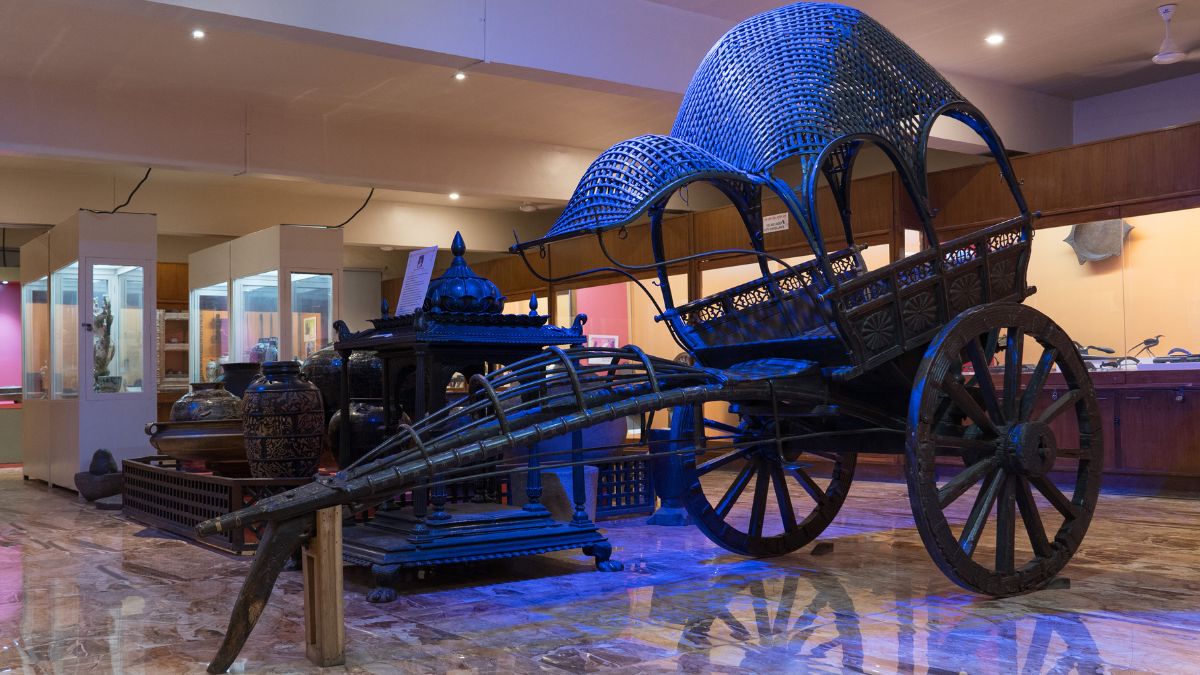
Raja Dinkar Kelkar was not a king, not a wealthy industrialist, not a colonial administrator. He was a middle-class Pune resident who, following the death of his young son, spent sixty years collecting the objects of Indian daily life that everyone else considered too ordinary to preserve — and then gave all of it away. The museum that bears his collection’s name on Bajirao Road in Pune holds over 20,000 objects. He collected every one of them personally. He donated every one of them to the state.
The life of raja dinkar kelkar is, in its shape, a grief story that became a collection story that became a legacy story. Understanding it gives the museum an entirely different quality than visiting it without knowing who he was.
Early Life — A Pune Brahmin of the Colonial Era
Raja Dinkar Kelkar was born on 30 November 1896 in Pune. His full name was Dinkar Gopal Kelkar — the “Raja” prefix was an honorific adopted later, related to his son’s name and his memorial project. He grew up in the intellectual environment of late 19th and early 20th century Pune — a city then at the centre of the Indian reform and nationalist movements, with Bal Gangadhar Tilak’s newspapers circulating in the same neighbourhoods where the young Kelkar grew up.
He received a formal education in the Pune of the early 20th century — English medium schooling, exposure to the Western educational tradition that the colonial system provided, alongside the Marathi cultural environment of a Brahmin household. He worked as a teacher and later in government service, occupying the kind of modest professional position that was the standard career path for educated middle-class Maharashtrians of his generation.
Nothing in the early biographical record of raja dinkar kelkar suggests the sixty-year collecting project that would define his life. The external circumstances that precipitated it were devastating.
The Death of Raja — The Beginning of Everything
In the early 1920s, raja dinkar kelkar’s young son — named Raja — died. The specific cause and exact year are recorded in the museum’s own documentation but are not widely publicised; what the family chose to preserve publicly is the consequence of the death rather than its medical circumstances.
Raja Kelkar’s response to his son’s death was not unusual in its initial impulse: he turned toward devotion and toward memorial activity. What was unusual was the specific form the memorial took. Kelkar decided to build a museum in his son’s memory — a museum that would collect and preserve the objects of Indian daily life that were being lost as the colonial economy and its industrial products replaced the handmade material culture of pre-industrial India.
The decision to name the memorial after raja — his son — and to build it through the specific activity of collecting Indian craft objects rather than through the construction of a building or the funding of a scholarship programme reflected Kelkar’s own values and perceptions. He believed that what was being lost in the transition from pre-colonial to colonial to post-colonial India was not just political autonomy but material culture — the objects that people made and used and touched every day, that encoded the accumulated knowledge of specific craft traditions, that could not be recovered once the last craftsperson who knew how to make them was gone.
Sixty Years of Collecting — The Method and the Obsession
Raja dinkar kelkar began collecting in the early 1920s and continued until shortly before his death in 1990 — approximately sixty-five years of active collecting. The scope of what he collected was determined by his conviction that ordinary objects were as worth preserving as royal treasures.
What he specifically sought out:
- Oil lamps from every regional tradition in India — he ultimately collected over 2,000, each different from every other
- Betel-nut cutters (sarotas) from every Indian region — miniature sculptures disguised as kitchen implements
- Carved wooden doors and door frames from buildings scheduled for demolition
- Musical instruments from both classical and folk traditions
- Personal objects from royal domestic life — jewellery cases, hand mirrors, sindoor containers, kajal boxes
- Children’s toys from the 17th to 19th centuries
- Weapons and armour from the Maratha period, including the extraordinary crocodile skin armour
- Ivory carving from the Mughal and Deccan court traditions
- Miniature paintings from multiple regional schools
- Architectural elements — including the complete interior of the Mastani Mahal in Kothrud, salvaged from demolition
The collecting method of raja dinkar kelkar was personal and direct. He did not employ agents or dealers. He travelled across India — to Gujarat, Rajasthan, Karnataka, Kerala, Bengal, the Deccan — visiting markets, meeting craftspeople, negotiating with families who were clearing out old objects, and salvaging from buildings about to be demolished. Each object came to him through a specific encounter rather than through an institutional purchasing process.
The Financial Reality
One of the most remarkable aspects of raja dinkar kelkar’s collecting project is that it was sustained on a modest professional income for sixty-five years without significant external funding. He was not wealthy. Every purchase required a choice about what else not to spend money on. The collection of 20,000+ objects was assembled through the systematic subordination of personal financial comfort to the project of preservation.
The Early Museum Space
Long before the formal museum was established, raja dinkar kelkar’s house in Pune had become effectively a storage and display space for his collection. Early visitors — scholars, art historians, curious neighbours — came to see the objects in his home. The informal museum of his house was the predecessor to the formal institution on Bajirao Road.
The Gift — 20,000 Objects to the People of Maharashtra
In 1975, raja dinkar kelkar donated his entire collection — then comprising approximately 20,000 objects — to the Maharashtra state government. He was 79 years old. He had been collecting for more than fifty years. He gave everything away.
The donation was made on one condition: that the collection be housed in a dedicated museum in Pune and maintained in perpetuity for public access. The Maharashtra government accepted both the collection and the condition. The museum on Bajirao Road, in the building now associated with the collection, was established to fulfil that condition.
The significance of the gift in the life of raja dinkar kelkar cannot be understated. He had spent fifty years and his professional income building this collection. He had no children to inherit it — Raja, his son for whom the collection was named, had died decades before. The donation was not a tax strategy or a social obligation. It was a deliberate act of public generosity: the return of something gathered from the people of India to the people of India.
Recognition — The Padma Shri and Beyond
Raja dinkar kelkar received the Padma Shri — India’s fourth highest civilian honour — in recognition of his contribution to the preservation of Indian material culture. The award came late in his life, after the donation of the collection was complete.
He also received recognition from international heritage and museum communities, though his reputation remained most significant within Maharashtra rather than achieving the international profile that the collection’s quality would have justified for a European collector in similar circumstances. This asymmetry — a world-class collector known primarily regionally — is itself a reflection of the dynamics of cultural attention in post-colonial India.
Raja Dinkar Kelkar’s Death — 1990
Raja dinkar kelkar died on 22 December 1990 at the age of 94. He had outlived his son by approximately seven decades, his collecting project by fifteen years (the donation was in 1975), and the establishment of the formal museum by several years. He died having seen his collection institutionalised, his son’s memorial made permanent, and his conviction — that the objects of Indian daily life were worth preserving — validated by the hundreds of thousands of visitors who had passed through the museum by the time of his death.
He is buried in Pune. The museum on Bajirao Road carries both his name and the name of his son — Raja Dinkar Kelkar Museum — in the double commemoration that he designed from the beginning: the father’s life work in the son’s memory.
What Raja Dinkar Kelkar’s Life Tells Us About the Museum
Understanding raja dinkar kelkar’s biography changes how you see the collection in the museum. The 2,000 lamps are not an institution’s acquisition programme — they are one man’s sixty-year obsession, sustained on a modest income, driven by a specific grief and a specific conviction. The Mastani Mahal panels were saved from demolition by a person who drove to Kothrud and negotiated for them before a bulldozer arrived. The crocodile armour came from somewhere, brought by someone, because that person thought it was worth keeping.
Every object in the Raja Dinkar Kelkar Museum has a human story behind it — not the story of the person who originally made or used it, which is often lost, but the story of the person who decided it was worth not losing. That person’s story is raja dinkar kelkar’s story, and the portrait near the museum entrance is the right place to start.
Frequently Asked Questions
Who was Raja Dinkar Kelkar?
A Pune resident (1896–1990) who spent sixty years collecting Indian craft objects and donated over 20,000 of them to the Maharashtra government in 1975. The Raja Dinkar Kelkar Museum on Bajirao Road houses this collection. He collected in memory of his son Raja, who died young.
Why did Raja Dinkar Kelkar start collecting?
Following the death of his young son Raja, Kelkar decided to build a museum in his son’s memory. The specific form — collecting the objects of Indian daily life — reflected his belief that this material culture was being permanently lost in the transition to industrial goods.
How many objects did Raja Dinkar Kelkar collect?
Over 20,000 objects across sixty-five years of collecting. Approximately 2,500 are on display at any time in the museum; the rest are in the collection’s storage.
Did Raja Dinkar Kelkar receive any awards?
Yes — the Padma Shri, India’s fourth highest civilian honour, in recognition of his contribution to preserving Indian material culture.
When did Raja Dinkar Kelkar donate his collection?
In 1975, when he was 79 years old — donating all 20,000+ objects to the Maharashtra state government on the condition they be maintained in a dedicated museum in Pune.
Explore More:
1 thought on “Raja Dinkar Kelkar — Complete Life Story of the Man Who Built Pune’s Most Extraordinary Museum”