
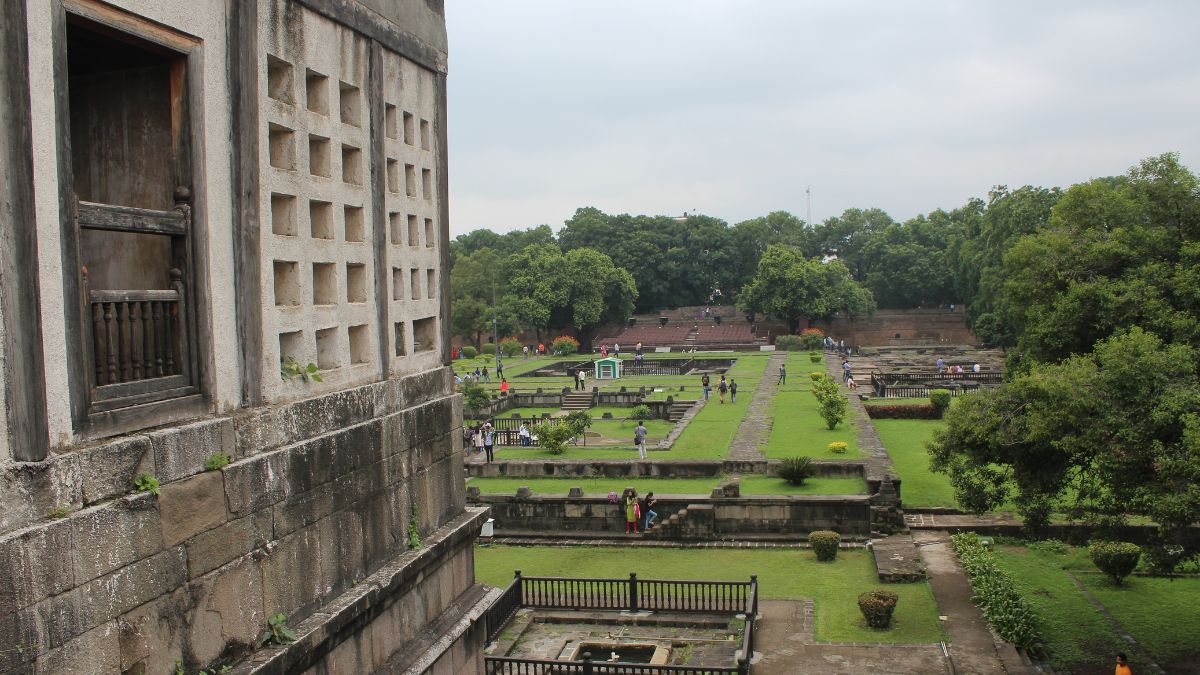
Every week, thousands of people search for shaniwar wada information on Google — and the majority of what they find is either incomplete, outdated, or simply wrong. Entry fees listed from 2019. Timings that no longer apply. Ghost stories presented as historical fact. This article addresses the 35 most commonly asked questions about shaniwar wada with accurate, verified information as of 2026.
If you have a specific question about shaniwar wada, it is almost certainly answered below.
Shaniwar Wada Information — Visitor Basics (Questions 1–10)
1. What is Shaniwar Wada?
Shaniwar Wada is a historic fortified palace complex built in 1730 by Peshwa Bajirao I in Pune, Maharashtra. It served as the seat of the Peshwa rulers of the Maratha Empire for nearly a century. Today it is an Archaeological Survey of India (ASI) maintained heritage monument and one of Pune’s most visited tourist sites.
2. Where is Shaniwar Wada located?
Shaniwar Wada is located at Shaniwar Peth, Pune – 411 030. It sits at the junction of Shaniwar Peth and the old city lanes, approximately 500 metres from Dagdusheth Ganpati Temple and 300 metres from the Kelkar Museum. The address for navigation: Shaniwar Wada, Bajirao Road, Pune.
3. What are Shaniwar Wada timings?
Shaniwar Wada is open from 8:00 AM to 6:30 PM daily, all seven days of the week including public holidays. The light and sound show runs in the evenings — see Question 15.
4. What is the entry fee for Shaniwar Wada?
Entry fee: ₹25 per adult Indian national. Children under 15: free. Foreign nationals: ₹300. The fee is collected at the ticket counter near the Delhi Darwaza (main entrance gate). Online ticketing is not available — ticket purchase is at the gate only.
5. Is Shaniwar Wada open on Monday?
Yes — Shaniwar Wada is open all 7 days including Monday. There is no weekly closure. It is open on all public holidays as well. Timings: 8:00 AM to 6:30 PM daily.
6. How much time do I need at Shaniwar Wada?
A complete visit to Shaniwar Wada requires 1 to 1.5 hours — 20–30 minutes for the five gates and outer walls, 30–40 minutes for the inner complex and surviving structures, and 10–15 minutes for the garden area. If you attend the light and sound show, add 45 minutes in the evening.
7. What is the best time to visit Shaniwar Wada?
Early morning — arriving at 8:00 AM when the gates open. Reasons: the light falls on the Delhi Darwaza from the east for the best photography, the complex is quiet before the tourist groups arrive (typically from 10 AM onward), and the temperature is significantly cooler than midday. October to February is the best season — clear light, cool temperatures. Avoid 11 AM to 3 PM in summer (March–May).
8. Is Shaniwar Wada worth visiting?
Yes — for anyone interested in Indian history, Maharashtrian culture, or the Maratha Empire period, Shaniwar Wada is essential Pune. The scale of the surviving fortification walls, the five extraordinary gates, and the historical weight of the site (this was the administrative centre of the empire that controlled much of India in the 18th century) make it worth a dedicated visit. The fact that the palace buildings themselves were destroyed in the 1828 fire — and only the outer walls and gates survive — means visitors need some historical imagination, which is more engaging for some visitors than a preserved palace interior would be.
9. Is photography allowed inside Shaniwar Wada?
Yes — personal photography is allowed throughout Shaniwar Wada at no extra charge. Tripods and professional video equipment require a separate permit from ASI. Drone photography is not permitted. Photography inside the inner complex is unrestricted for personal use. See the full photography guide: Shaniwar Wada Photography Guide.
10. Is there parking at Shaniwar Wada?
There is no parking within the Shaniwar Wada complex. Designated paid parking (P1 and P2) is available on Shivajinagar Road approximately 400–600 metres from the main entrance. Auto-rickshaw drop-off at the Delhi Darwaza is permitted. For visitors coming by Pune Metro, Budhwar Peth station is the nearest stop (approximately 800 metres walk). Street parking in the immediate area is heavily restricted by Pune traffic police on weekends.
Shaniwar Wada Information — History (Questions 11–18)
11. Who built Shaniwar Wada and when?
Shaniwar Wada was built by Peshwa Bajirao I, the first Bajirao, who laid the foundation on 22 January 1730. Construction continued under him and his successor Nanasaheb Peshwa (Balaji Bajirao). The name “Shaniwar Wada” comes from the fact that the foundation was laid on a Saturday (Shaniwar in Marathi).
12. Why was Shaniwar Wada built?
Bajirao I built Shaniwar Wada as the administrative headquarters and residential palace of the Peshwa court — the de facto rulers of the Maratha Empire after Chhatrapati Shahu Maharaj gave the Peshwa near-total executive authority. Pune was chosen as the Peshwa capital because of its central location in the Deccan and its proximity to the Sahyadri hill forts. Shaniwar wada information about the building’s original size: the palace complex occupied 6.25 acres and included multiple residential and administrative buildings.
13. What happened to the buildings inside Shaniwar Wada?
The interior palace buildings of Shaniwar Wada were destroyed in a massive fire on 27 February 1828. The fire burned for seven days and destroyed everything inside the fortification walls — all the residential quarters, the Hazari Karanje fountain complex, the administrative buildings. Only the perimeter fortification walls, the five gates, and the foundations of some inner structures survived. The cause of the fire was never conclusively established. Today visitors see the outer walls and gates (well preserved) and the open space of the inner complex where the buildings once stood.
14. Who were the Peshwas?
The Peshwas were the hereditary prime ministers of the Maratha Empire who, from the early 18th century, became the de facto rulers of the empire while the Chhatrapati (king) became a figurehead. The Peshwa dynasty ruled from Shaniwar Wada in Pune for nearly a century. Key Peshwas associated with the wada: Bajirao I (founder), Nanasaheb (builder of the palace complex), Madhavrao I (the greatest administrator), and Baji Rao II (the last Peshwa, who lost to the British in the Third Anglo-Maratha War in 1818). Full history: Shaniwar Wada History — Complete Guide.
15. What is the connection between Shaniwar Wada and Bajirao Mastani?
Bajirao I — the builder of Shaniwar Wada — had a relationship with Mastani, a courtesan (some accounts say a princess) from Bundelkhand, that was controversial in the Brahmin court at Pune. Mastani lived in a separate residence (the Mastani Mahal, now partially housed at the Kelkar Museum) rather than within Shaniwar Wada itself. The 2015 Sanjay Leela Bhansali film Bajirao Mastani dramatised this relationship with significant artistic licence. The panels from the original Mastani Mahal are preserved at the Raja Dinkar Kelkar Museum. Full article: Bajirao Mastani Shaniwar Wada — Real History vs the Film.
16. How old is Shaniwar Wada?
The foundation of Shaniwar Wada was laid on 22 January 1730 — making it 296 years old in 2026. The fortification walls and gates that survive are original 18th-century construction.
17. Which is the main entrance gate of Shaniwar Wada?
The Delhi Darwaza (Delhi Gate) on the north side is the main entrance and the largest of the five gates. It faces north toward Delhi — a deliberate political statement by Bajirao I about his ambitions for the Maratha Empire. The gate is 21 feet high with iron spikes on the lower portion to prevent elephant-mounted attacks.
18. What are the five gates of Shaniwar Wada called?
The five gates are: Delhi Darwaza (north, main entrance), Mastani Darwaza (east, named after Mastani), Khidki Darwaza (south, “window gate”), Ganesh Darwaza (north-east, named for a Ganesh idol above the arch), and Jambhul Darwaza (west, named for a jambhul tree once growing nearby). Full guide: Shaniwar Wada Five Gates — Complete Guide.
Shaniwar Wada Information — Light and Sound Show (Questions 19–22)
19. What is the Shaniwar Wada light and sound show?
The Shaniwar Wada light and sound show is a 45-minute narrated audiovisual presentation staged in the inner compound after dark. The show uses coloured lights on the surviving fortification walls and a recorded narration (available in Marathi, Hindi, and English) that tells the history of the Peshwa empire from the foundation of Shaniwar Wada through the 1818 British conquest.
20. What time is the Shaniwar Wada light and sound show?
Show timings: Marathi: 7:15 PM | Hindi: 8:15 PM | English: 9:15 PM. These timings apply on days the show is running — confirm on arrival as the show is occasionally suspended for maintenance or special events. The show runs daily except during monsoon weather disruptions.
21. What is the ticket price for the light and sound show?
Approximately ₹25 for Indian nationals (adult), ₹10 for children. Foreign nationals approximately ₹100. Tickets are purchased separately from the daytime entry ticket — at the ticket counter near the Delhi Darwaza in the evening.
22. Is the light and sound show worth attending?
Yes, particularly for first-time visitors who want the historical context for what they saw during the day visit. The Marathi show (7:15 PM) is the most energetically delivered. The English show (9:15 PM) is the most convenient for non-Marathi visitors but the latest — plan transport from the wada area accordingly at night.
Shaniwar Wada Information — Haunted Story (Questions 23–26)
23. Is Shaniwar Wada really haunted?
Shaniwar wada information on the haunting: the “haunted” reputation comes from a specific historical event — the murder of the 16-year-old Peshwa Narayanrao in 1773, killed on the orders of his uncle Raghunathrao (Raghoba) within the palace complex. According to the legend, his screams (“Kaka, mala vachva” — “Uncle, save me”) are heard at the complex on full moon nights. This is folklore rather than documented phenomenon — no verified paranormal evidence exists. The historical murder itself is well-documented and real. Full article: Shaniwar Wada Haunted Story — The Truth Behind the Legend.
24. Who was Narayanrao and why was he killed?
Narayanrao was the young Peshwa (prime minister) of the Maratha Empire, ruling at the age of 16. He was murdered on 30 August 1773 within Shaniwar Wada on the orders of his uncle Raghunathrao (Raghoba), who wanted to seize the Peshwaship. The murder was carried out by Gardis (soldiers) who had misunderstood — or deliberately altered — Raghunathrao’s order. The political fallout from the assassination contributed to the Maratha Empire’s eventual weakening.
25. Can you visit Shaniwar Wada at night for the ghost experience?
Shaniwar Wada is not open for night visits outside the light and sound show. The complex closes at 6:30 PM for daytime visitors. The light and sound show runs until approximately 10:00 PM (after the final English show), and visitors remain on the premises during the show but the complex closes after it ends. There is no separate haunted tour or night visit programme.
26. What does “Kaka mala vachva” mean?
“Kaka mala vachva” is Marathi for “Uncle, save me” — the words reportedly cried by young Peshwa Narayanrao as he was being killed within Shaniwar Wada in 1773. “Kaka” means uncle (specifically a father’s brother), “mala” means “me”, “vachva” means “save”. These words are central to the haunted legend and are referenced in the light and sound show narration.
Shaniwar Wada Information — Practical (Questions 27–35)
27. How do I get to Shaniwar Wada by metro?
Take the Purple Line to Budhwar Peth station — approximately 800 metres (10-minute walk) from Shaniwar Wada’s Delhi Darwaza. From Swargate Metro Station: 2 stops north, ₹15–20, 8 minutes. From Pune Railway Station: take the Purple Line to Budhwar Peth (one stop from Pune Junction station).
28. How far is Shaniwar Wada from Pune Railway Station?
Approximately 3.5 kilometres. Auto-rickshaw: 10–15 minutes, ₹60–90. By Pune Metro: Purple Line from Pune Junction to Budhwar Peth (one stop), then 10-minute walk — total approximately 20 minutes, ₹15–20.
29. How far is Shaniwar Wada from Pune Airport?
Approximately 12–13 kilometres. Cab/taxi: 25–40 minutes depending on traffic, ₹300–500 by app-based cab. Auto-rickshaw: 30–50 minutes, ₹150–250.
30. Is there a guide available at Shaniwar Wada?
ASI-licensed guides are available at the entrance for hire — they provide historical context that the self-guided visit does not include. Negotiate the fee before starting: typically ₹200–400 for a 1-hour guided tour. The guides vary significantly in quality — ask to see their ASI licence and confirm the language of the tour before committing. Alternatively, the light and sound show provides a structured historical narrative in the evening.
31. What should I wear to visit Shaniwar Wada?
Shaniwar Wada is not a religious site — there is no dress code. Comfortable walking shoes are essential (the inner complex is uneven stone and grass). Hat and sunscreen for summer visits (March–May). Light jacket for early morning winter visits (December–January). The grounds can be muddy after monsoon rain — avoid open sandals after heavy rainfall.
32. Is Shaniwar Wada accessible for wheelchair users?
Partially. The main entrance through Delhi Darwaza is accessible, and the broad inner pathways are manageable in a wheelchair. However, some areas of the complex have uneven stone surfaces and steps that are not wheelchair-accessible. The outer perimeter walk is the most accessible route for mobility-impaired visitors.
33. Are food and water available inside Shaniwar Wada?
No food vendors or restaurants operate inside the Shaniwar Wada complex. A water vending machine is available near the entrance area. The surrounding streets outside the Delhi Darwaza have chai tapris, vada pav stalls, and snack vendors that are available before or after your visit. For a proper meal, the restaurants on Laxmi Road (200 metres from the gate) are the closest quality option.
34. What is near Shaniwar Wada to visit in the same day?
All three of these can be visited in the same morning in a 3-hour heritage circuit: Dagdusheth Ganpati Temple (500 metres, free), Raja Dinkar Kelkar Museum (300 metres from Dagdusheth, ₹100 entry), and the Vishrambaug Wada (500 metres from Kelkar Museum). Full neighbourhood guide: Places Near Shaniwar Wada — Walking Distance Heritage Circuit.
35. Can I attend events at Shaniwar Wada?
Yes — Shaniwar Wada hosts cultural events throughout the year, including the Sawai Gandharva Bhimsen Festival (classical music, typically December–January), heritage walks organised by the Pune Municipal Corporation, and occasional Maharashtra government cultural programmes. Check the PMC cultural events calendar or the ASI Pune circle website for upcoming events. During these events, access to parts of the complex may be restricted for regular visitors.
Explore More: