
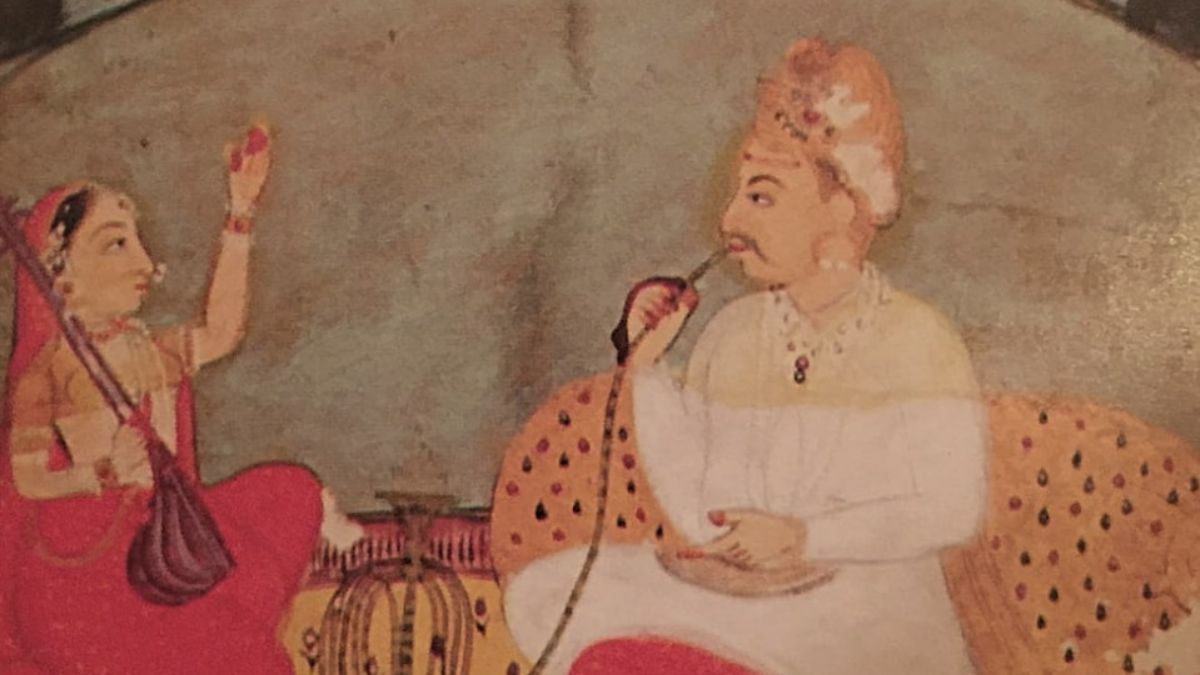
In December 2015, a Bollywood film called Bajirao Mastani was released and became one of the highest-grossing Hindi films of the year. In the months that followed, searches for “bajirao mastani shaniwar wada” increased dramatically — tourists who had watched the film arrived at the fort asking where exactly Bajirao and Mastani had lived, where the famous dance sequences had been filmed, and whether the story was true.
The honest answer to all three questions requires separating two things that the film deliberately blended: the historical record and the cinematic interpretation. Bajirao Mastani Shaniwar Wada is a real historical story — the relationship between Peshwa Bajirao I and a woman called Mastani is documented in court records, in British colonial archives, and in the accounts of historians who have studied the period for generations. But the 2015 film is not a documentary. It is a drama that uses the historical figures and the Shaniwar Wada setting as its framework and then fills in the gaps with what made for compelling cinema.
This article tells you what the historical record actually shows about bajirao mastani shaniwar wada, what the film changed or invented, what you can see at the fort today that is genuinely connected to both figures, and what the Mastani Darwaza — the gate named for her — tells us about how she was remembered.
Who Was Bajirao I — Beyond the Romance
Peshwa Bajirao I is one of the most significant military commanders in Indian history, and understanding him beyond the romantic storyline of bajirao mastani shaniwar wada gives the full story its proper weight.
Born in 1700, Bajirao was appointed Peshwa (Prime Minister) of the Maratha Empire in 1720 at the age of twenty — by Chhatrapati Shahu Maharaj, who recognised in the young man an administrative and military talent that outran his age. He was right. In the two decades that followed, Bajirao I fought more than forty battles and lost none of them — a record that places him in a very short list of military commanders in world history whose campaigns produced no defeat.
His strategic vision extended far beyond individual battles. Bajirao I understood that the Maratha Empire’s long-term survival required expanding its control over the entire subcontinent — not as territorial acquisition alone, but as a network of political relationships, tribute arrangements, and military presence that would make the Marathas indispensable to the political order of India. By the time of his death in 1740, that project was substantially advanced.
The bajirao mastani shaniwar wada story — the personal relationship with Mastani — was a side plot in his life rather than its defining theme. It was important to him personally and politically controversial at his court. But it was not the central drama of his existence. That was the forty campaigns, the expanding empire, and the question of whether Maratha power could be made permanent.
Who Was Mastani — Origins and Background
Mastani is the most important figure in the bajirao mastani shaniwar wada story after Bajirao himself, and also the most historically uncertain. The facts that are generally accepted:
Mastani was the daughter of Maharaja Chhatrasal, the ruler of Bundelkhand in central India, and a woman described in some accounts as a Persian concubine in Chhatrasal’s court. This made Mastani of mixed Hindu Rajput and Persian (Muslim) heritage — a combination that was the source of much of the opposition she faced in the Brahmin Peshwa court at Shaniwar Wada.
She came to Pune in the context of the political relationship between Bajirao and Chhatrasal. Bajirao had helped Chhatrasal defend Bundelkhand against Mughal forces in 1728, and Chhatrasal — grateful and without a male heir — offered Bajirao one-third of his kingdom and Mastani as expressions of that gratitude. Mastani’s presence in Pune was therefore not a romantic elopement as the film suggests, but a formal political transfer.
What followed at Shaniwar Wada is documented but disputed in its details. Bajirao I recognised Mastani as a secondary companion — she had his genuine affection, by most accounts, and bore him a son named Krishna Rao (later baptised as Shamsher Bahadur I). The opposition from Bajirao’s mother Radhabai, his brother Chimnaji Appa, and significant sections of the Brahmin court was real, sustained, and ultimately more successful in its aims than the film suggests.
The Bajirao Mastani Shaniwar Wada Connection — What the Historical Record Says
The specific connection between bajirao mastani shaniwar wada involves both what Mastani’s presence at the fort meant and what physical traces of that presence remain.
Mastani lived at Shaniwar Wada — or more precisely, in a separate palace built or assigned for her within the fort compound. The historical accounts differ on exactly where this was located within the complex, but the existence of a section of the palace specifically associated with her is not disputed. The Mastani Darwaza — the gate bearing her name — is the most durable physical evidence of her presence at shaniwar wada.
What is less clear from the historical record is the quality of her daily life at the fort and the extent to which the opposition she faced translated into physical restriction. Some accounts suggest she was confined to her section of the palace for extended periods. Others suggest she moved more freely. The film dramatises the most restrictive interpretation; the historical record is ambiguous.
What is documented: Mastani died in 1740, approximately at the same time as Bajirao I — some accounts say within days of receiving news of his death on campaign. The cause of her death is not definitively established in contemporary records. She was approximately 40 years old.
The Mastani Darwaza — Why a Gate Was Named for Her
Among all the physical evidence of the bajirao mastani shaniwar wada connection, the Mastani Darwaza is the most significant and the most durably present. It is one of the five original teak gates of the fort, positioned on the north wall adjacent to the main Delhi Darwaza, and it bears her name to this day.
The significance of this gate goes beyond simple commemoration. The Mastani Darwaza was named during Bajirao’s lifetime — not as a posthumous memorial, but as a contemporary designation. In a court where Mastani’s presence was actively contested, where Brahmin sensibilities objected to her mixed heritage and her Muslim religious practices, naming a gate of Shaniwar Wada after her was a public statement. It announced, in permanent teak and iron, that she was part of this place.
The gate served as the primary access point to the section of the palace where Mastani’s quarters were located. It was smaller and more ornate than the Delhi Darwaza — not the gate of military power, but the gate of something more personal. The contrast between the two adjacent gates at bajirao mastani shaniwar wada — the imperial ambition of Delhi Darwaza and the intimate commemoration of Mastani Darwaza — is itself a kind of historical document.
Standing at the Mastani Darwaza today, knowing the full context, is one of the more emotionally resonant experiences available at the fort. Most visitors walk past it on the way to the more famous Delhi Darwaza without pausing. Those who do pause — who know what the name means and why it was given — find that the smaller gate repays attention that the larger one, for all its iron spikes, does not quite earn in the same way.
Bajirao Mastani Real Story vs the 2015 Film — What Was Changed
The 2015 film directed by Sanjay Leela Bhansali used the bajirao mastani shaniwar wada story as its historical framework and then exercised significant creative licence with the details. Understanding what was changed helps visitors to the fort see both the film’s achievement and its departures from the record:
| Element | Historical Record | 2015 Film |
|---|---|---|
| How they met | Political transfer after Bajirao helped Chhatrasal militarily | Romantic encounter at Chhatrasal’s court |
| Mastani’s status | Secondary companion, formalised politically | Romantic love affair, more dramatic opposition |
| Opposition from family | Real and sustained — Radhabai and Chimnaji Appa opposed | Broadly accurate, somewhat dramatised |
| Mastani’s religious identity | Mixed Hindu-Muslim — performed both religious practices | Depicted as causing the primary conflict — broadly accurate |
| Mastani’s confinement | Some accounts suggest restriction, details disputed | Dramatic imprisonment sequence |
| Mastani’s death | Timing and cause uncertain — possibly died of grief | Depicted as dying upon news of Bajirao’s death |
| Bajirao’s military career | Forty battles, no defeats — the dominant fact of his life | Background element — romance is foregrounded |
| Shaniwar Wada as setting | Mastani lived here; the fort compound was the setting | Accurate as the primary setting — sets were built but inspired by the fort |
| Film locations | The 2015 film was shot on sets in Mumbai — not at Shaniwar Wada itself | Grand sets inspired by the fort’s aesthetic |
Important for visitors: The 2015 film was not shot at Shaniwar Wada. The sets were built in Mumbai studios, designed to capture the aesthetic of Peshwa-era architecture. The actual bajirao mastani shaniwar wada location is the fort you visit in Pune — what the film’s production designers imagined it might have looked like at its 18th-century height.
What You Can See at Shaniwar Wada That Connects to Bajirao Mastani
For visitors to bajirao mastani shaniwar wada who want to connect the film’s story to the actual site, these are the specific elements worth seeking out:
- The Mastani Darwaza: On the north wall, adjacent to the main Delhi Darwaza. This is the primary physical connection to Mastani at the fort — the gate named for her during Bajirao’s lifetime.
- The Delhi Darwaza: The gate that commemorates Bajirao’s own imperial ambitions — the contrast between these two adjacent gates captures something essential about the bajirao mastani shaniwar wada story.
- The inner palace foundations: The stone ground floor foundations visible in the garden area are the base of the palace where Mastani’s quarters were located. The upper floors were destroyed in the 1828 fire; what remains is the stone skeleton of those rooms.
- The Hazari Karanje fountain: The formal garden fountain that was at the centre of the palace Mastani inhabited — restored but substantially original in its lotus form.
The Mastani Mahal at the Raja Dinkar Kelkar Museum — 1.4 kilometres from Shaniwar Wada — is a separate and distinct Mastani connection: a room assembled from original 18th-century architectural elements from a different Peshwa-era building associated with her in Kothrud. Visiting both sites gives a fuller picture of the bajirao mastani shaniwar wada story’s material legacy than either alone provides. Full details: Mastani Mahal Kelkar Museum — Complete Story.
How to Find the Mastani Darwaza During Your Visit
The Mastani Darwaza at bajirao mastani shaniwar wada is on the north wall of the fort, to the right of the main Delhi Darwaza as you face the fort from outside. Most visitors enter through the Delhi Darwaza and immediately move into the garden — the Mastani Darwaza is visible from within the fort if you look back toward the north wall after entering. It is smaller, less visually commanding, and often missed by visitors focused on the larger main gate.
The walking route through all five shaniwar wada gates — including the Mastani Darwaza — with timings and photography tips: Five Gates of Shaniwar Wada — Complete Guide.
Frequently Asked Questions About Bajirao Mastani Shaniwar Wada
Is the Bajirao Mastani story real?
Yes — the relationship between Peshwa Bajirao I and a woman called Mastani is documented in historical records including Maratha court documents and British colonial archives. The 2015 film dramatised and altered some details, but the central story of their relationship and its controversy at the Peshwa court is historically grounded.
Was the 2015 Bajirao Mastani film shot at Shaniwar Wada?
No. The film was shot on sets constructed in Mumbai studios, designed to evoke the aesthetic of Peshwa-era Shaniwar Wada. The actual fort was not used as a filming location.
Where is the Mastani Darwaza at Shaniwar Wada?
On the north wall of the fort, to the right of the main Delhi Darwaza entrance. It is smaller and more ornate than the Delhi Darwaza and serves as the primary physical evidence of Mastani’s presence at bajirao mastani shaniwar wada.
Who was Mastani really?
The daughter of Maharaja Chhatrasal of Bundelkhand and a woman of Persian heritage in his court, making her of mixed Hindu Rajput and Persian (Muslim) background. She came to Pune as part of a political arrangement after Bajirao helped defend Bundelkhand against the Mughals. She bore Bajirao a son and died in 1740, approximately when Bajirao died on campaign.
Where is the Mastani Mahal in Pune?
There are two distinct Mastani connections in Pune. The Mastani Darwaza is at Shaniwar Wada (the gate in the fort’s north wall). The Mastani Mahal is at Raja Dinkar Kelkar Museum on Bajirao Road — a room assembled from original 18th-century architectural panels from a different building associated with Mastani in Kothrud. Full guide: Mastani Mahal at Kelkar Museum.
Did Bajirao and Mastani actually live at Shaniwar Wada?
Yes — Bajirao I lived at Shaniwar Wada as the seat of his Peshwa administration, and Mastani lived in a section of the palace compound during the period of their relationship. The specific quarters she occupied no longer exist — they were destroyed in the 1828 fire — but the Mastani Darwaza and the general area of the inner compound are the genuine physical connection.
Explore More: