
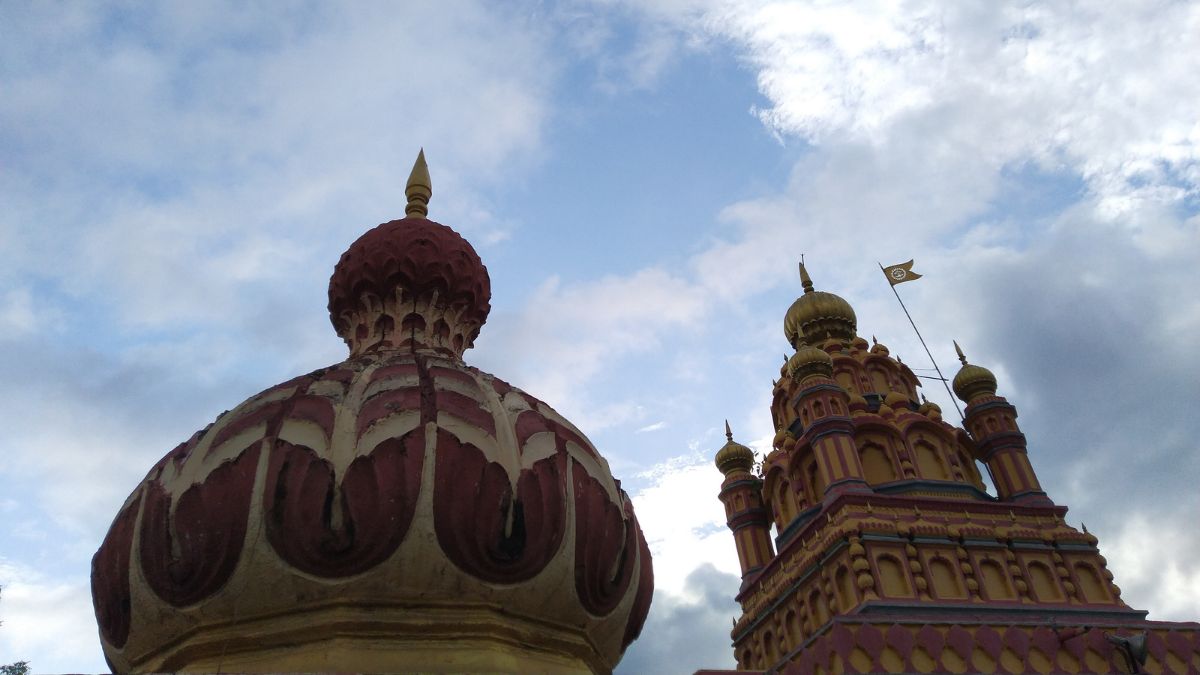
Parvati hill pune history is the story of a hill that the Peshwas made sacred, one temple at a time, over the course of a century. Between 1749 and the early 19th century, five temples were built at the summit — each reflecting the religious priorities of the Peshwa who commissioned it, and together forming a complex that served as the spiritual home of the court that ran the Maratha Empire from Shaniwar Wada below.
The parvati hill pune history is not as dramatic as the history of Shaniwar Wada or as battle-specific as the history of Sinhagad Fort. It is the quieter history of religious patronage, of Brahmin court culture, and of the way one natural landmark was gradually transformed from a hill with a view into a site of layered significance — religious, political, and memorial — that it retains today.
The Hill Before the Peshwas — What Parvati Hill Was
The parvati hill pune history before the Peshwa period is difficult to document precisely. The hill was known as a natural landmark in the landscape of the Pune basin — visible from the south for some distance, with a height that made it significant as a viewpoint and possibly as a ritual site in the folk religious traditions of the area.
What is clear from parvati hill pune history is that there was no formal temple complex on the hill before the Peshwa period. The hill’s transformation into a heritage religious site was entirely a Peshwa-era project, beginning in 1749.
1749 — Peshwa Balaji Bajirao and the First Temple
The parvati hill pune history begins formally in 1749, when Peshwa Balaji Bajirao — known as Nana Saheb, the son of the great Bajirao I who built Shaniwar Wada — commissioned the construction of the Devdeveshwar Temple at the summit of the hill.
Balaji Bajirao was at this point the most powerful man in Maharashtra — the Peshwa who had expanded the Maratha Empire to its greatest territorial extent. He was also a Brahmin scholar with a deep personal devotion to Shiva, and his decision to build the Devdeveshwar Temple at the hilltop reflected both personal religious motivation and political awareness: a hilltop temple visible from Shaniwar Wada and from across the city was a public statement of the Peshwa court’s religious commitment.
The Devdeveshwar Temple — literally “Lord of the Lords” — is dedicated to Shiva in his most elevated form. The idol within the inner sanctum is a naturally occurring black stone lingam rather than a crafted figure — a feature of the most ancient and revered Shiva temple tradition in the Deccan. The temple’s construction quality, its proportions, and the care taken in its architectural details reflect the resources and ambitions of a court at the peak of its power.
The Following Temples — A Century of Peshwa Religious Patronage
After the Devdeveshwar Temple in 1749, parvati hill pune history records four more temples being added to the summit complex over the following decades, each commissioned by a different Peshwa or under different Peshwa patronage.
The Parvati Temple — The Temple That Named the Hill
The Parvati Temple, dedicated to Goddess Parvati (the consort of Shiva), was added to the complex after the original Devdeveshwar construction. It occupies the highest point of the parvati hill pune summit and its distinctive shikhara (tower spire) is visible from much of south Pune. The temple gives the hill its name — before the temple’s construction, the hill would have been identified by its natural features; after, it became Parvati Hill in the popular usage that persists today.
The Kartik Swami Temple
Kartik Swami — Kartikeya, the son of Shiva and Parvati, and in Hindu mythology the general of the celestial armies — has his own temple within the parvati hill pune complex. Kartik temples are less common in Maharashtra than in South India (where Murugan, as he is known in Tamil tradition, is a primary deity), making the Kartik Swami Temple here an interesting reflection of the Peshwa court’s awareness of pan-Indian religious tradition beyond the immediate Maharashtrian context.
The Vishnu Temple
The Peshwas were Brahmin scholars with exposure to the full breadth of Hindu theological tradition. The inclusion of a Vishnu temple in the parvati hill pune complex reflects the Vaishnavite strand of Brahmin practice that coexisted with the Shaivite focus of the Devdeveshwar and the Goddess tradition of the Parvati Temple.
The Ganpati Temple
The Ganpati Temple — dedicated to Lord Ganesha — is the smallest of the five but carries the most universal significance. In Maharashtrian Hindu practice, Ganesha is worshipped before all other deities — no puja, no ceremony, no temple visit is considered complete without beginning with Ganesha. The Ganpati Temple at parvati hill pune occupies the appropriate position as the first point of worship for visitors climbing the steps.
The Peshwas and Parvati Hill — The Personal Connection
Beyond the formal commissioning of temples, parvati hill pune history includes several personal connections between specific Peshwas and this hill that go beyond the architectural patronage.
Madhavrao I — widely considered the greatest of all the Peshwas, who rebuilt the Maratha Empire after the catastrophe of the Third Battle of Panipat in 1761 — is associated with parvati hill pune in his final years. Madhavrao suffered from tuberculosis throughout his short life and died at 27. In the period of his illness, he reportedly spent time at Parvati Hill — the hilltop air and the religious environment of the temple complex were considered restorative. The emotional weight of this detail in parvati hill pune history is significant: the Peshwa who had restored the empire dying at 27, spending his last months on this hill.
The connection between parvati hill pune history and the Peshwa court’s inner life — not just its public religious patronage — is also visible in the Peshwa Museum at the summit, which houses objects from this personal dimension of the court’s relationship with the hill.
The Peshwa Museum at Parvati Hill — What It Contains
Adjacent to the temple complex at the parvati hill pune summit, the Peshwa Museum is maintained by the Maharashtra government and houses artefacts from the period of active Peshwa use of the hill. The collection includes:
- Weapons from the Peshwa military collection — swords, daggers, and ceremonial arms that represent the martial culture alongside which the religious patronage of parvati hill pune history existed
- Personal objects from the Peshwa court — household items, religious accessories, personal effects that communicate the daily material culture of the 18th-century Brahmin court
- Miniature paintings depicting scenes from Peshwa court life and Hindu mythology in the Deccan style that was the dominant visual art form of the period
- Documents and manuscripts — administrative and religious texts from the Peshwa period, some in Modi script (the traditional Marathi business and administrative script that went out of use in the 20th century)
- Coins and seals from the Maratha Empire period showing the development of the Peshwa state’s administrative apparatus
The Peshwa Museum at parvati hill pune is modest in scale compared to the Raja Dinkar Kelkar Museum in the old city — a thorough visit takes 30 to 45 minutes. But for visitors who have come specifically to understand parvati hill pune history rather than simply to climb and descend, the museum provides a material context for the temples and the hill that the temple visit alone cannot.
Museum timings: 9:00 AM to 12:00 PM and 2:00 PM to 5:00 PM. Closed Mondays.
After the Peshwas — What Happened to Parvati Hill
The parvati hill pune history after the fall of the Peshwa Empire in 1818 follows the pattern of many Peshwa-associated sites: a period of reduced use and maintenance under British administration, followed by gradual rehabilitation after Indian independence.
The British did not actively destroy or desecrate the parvati hill pune temple complex — unlike some Maratha-era sites that were converted to colonial uses, the hilltop temples remained in religious use through the colonial period. But without the active patronage of the Peshwa court, maintenance was reduced and the complex entered a period of quieter existence.
After 1947, the Maharashtra government assumed responsibility for the maintenance of the temple complex and established the Peshwa Museum. The garden around the step base was developed as a public green space. The 103 steps were repaired and regularised. Parvati hill pune history entered its current phase — a working temple site that functions simultaneously as a heritage monument, a morning exercise destination, and one of the finest urban viewpoints in the city.
Frequently Asked Questions About Parvati Hill Pune History
Who built the temples at Parvati Hill Pune?
The Peshwa rulers of the Maratha Empire, beginning with Peshwa Balaji Bajirao (Nana Saheb) who commissioned the Devdeveshwar Temple in 1749. The five-temple complex was built over approximately a century of Peshwa patronage.
What is the oldest temple at Parvati Hill Pune?
The Devdeveshwar Temple, commissioned in 1749 by Peshwa Balaji Bajirao — the first and most significant of the five temples in parvati hill pune history.
What is the Peshwa Museum at Parvati Hill?
A government-maintained museum at the summit housing weapons, personal objects, paintings, and documents from the Peshwa period. Open 9:00 AM to 12:00 PM and 2:00 PM to 5:00 PM, closed Mondays.
Which Peshwa is most associated with Parvati Hill?
Peshwa Balaji Bajirao (built the first temple in 1749) and Madhavrao I (spent time at the hill during his final illness) have the strongest personal associations in parvati hill pune history.
Is Parvati Hill mentioned in the Maratha Empire period?
Yes — parvati hill pune history is directly connected to the Peshwa court’s religious life from 1749 onward. The hill was visible from Shaniwar Wada and served as the spiritual companion to the political centre below.
Explore More: