
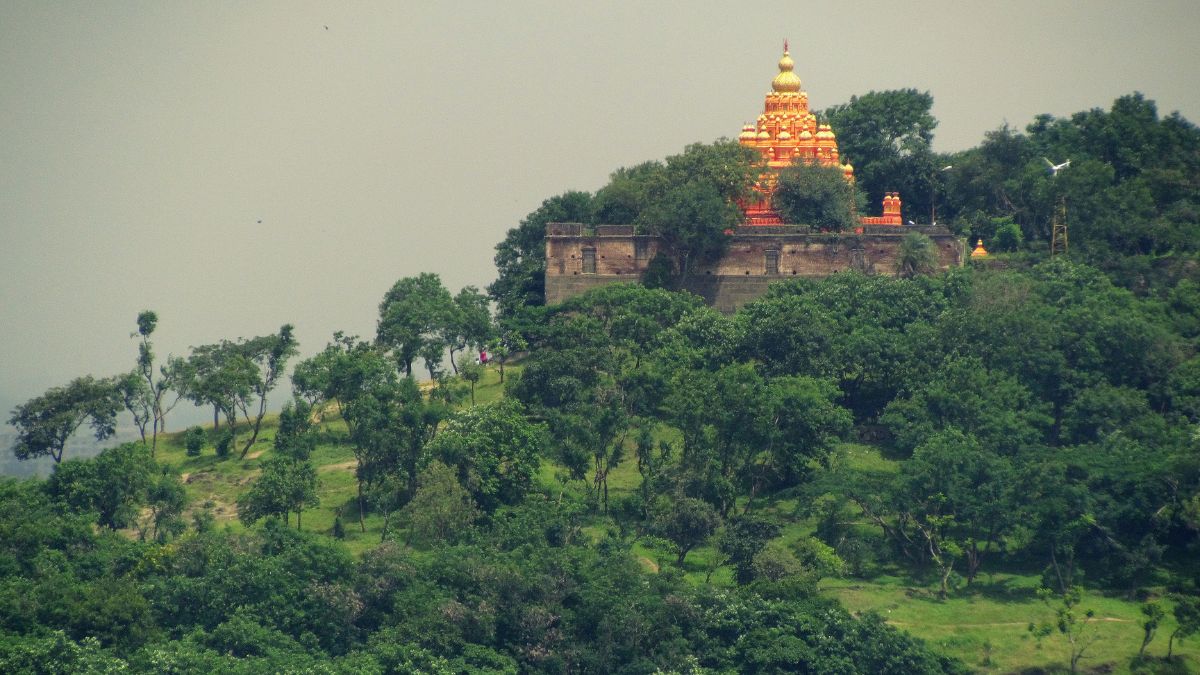
The parvati hill sunrise pune experience has a reputation that extends well beyond the photography community that first established it. Punekars who have been climbing these 103 steps before dawn for years describe it with a specific kind of affection — not the enthusiasm of discovery but the quieter satisfaction of a routine that is reliably worth the early alarm. A city that looks completely different from 1,370 feet, in the ten minutes when the eastern sky goes from dark orange to full gold and the buildings below begin to catch the first direct light of the day.
This guide covers everything specific to the parvati hill sunrise pune experience: which months have the best sunrise, exactly what time to arrive, what the view looks like from the summit, photography settings and angles, and what to carry for a 5:30 AM visit.
Why Parvati Hill Is Pune’s Best Sunrise Viewpoint
Parvati hill sunrise pune has several specific advantages over other sunrise viewpoints in and around the city.
Accessibility: 103 steps from a residential neighbourhood — not a trek, not a long drive, not a special expedition. The base is accessible by auto from anywhere in Pune in under 20 minutes. The climb takes 10 to 15 minutes. Total effort from your hotel to the summit: under an hour including travel.
Height: At approximately 2,100 feet above Pune, the parvati hill sunrise pune viewpoint is high enough to see clearly over the rooflines of the surrounding city — the panorama is unobstructed in the northern, eastern, and northeastern directions where the sunrise happens.
Direction: The eastern orientation of the main summit viewpoint puts the sunrise exactly in front of you rather than to the side — the city spreads out below and the horizon where the sun rises is above the city’s skyline, creating the layered composition (city foreground, sunrise background) that makes parvati hill sunrise pune photographs immediately recognisable.
Quiet: At 5:30 AM on a weekday, the parvati hill sunrise pune experience is shared with a small number of regular early morning walkers and the occasional serious photographer. The summit has none of the organised tourist infrastructure that makes some viewpoints feel managed rather than natural. You arrive, you climb, you stand on the temple hilltop and watch the sun come up over Pune. That is the entire thing.
Month-by-Month Sunrise Times at Parvati Hill Pune
| Month | Sunrise Time (approx) | View Quality | Recommended? |
|---|---|---|---|
| January | 7:15 AM | Excellent — clear skies, cool air | ★★★★★ |
| February | 6:58 AM | Excellent — still cool, very clear | ★★★★★ |
| March | 6:38 AM | Very good — slight haze building | ★★★★☆ |
| April | 6:18 AM | Good — heat haze begins | ★★★☆☆ |
| May | 6:05 AM | Moderate — significant heat haze | ★★★☆☆ |
| June | 6:03 AM | Variable — cloud cover likely | ★★☆☆☆ |
| July | 6:12 AM | Often overcast — atmospheric | ★★☆☆☆ |
| August | 6:18 AM | Often overcast — atmospheric | ★★☆☆☆ |
| September | 6:20 AM | Clearing — post-rain freshness | ★★★☆☆ |
| October | 6:19 AM | Very good — post-monsoon clarity | ★★★★☆ |
| November | 6:27 AM | Excellent — crystal clear skies | ★★★★★ |
| December | 7:00 AM | Excellent — cool, very clear | ★★★★★ |
Best months for parvati hill sunrise pune: November through February. The post-monsoon air clearing combined with the coolest temperatures of the year produces the most vivid and most photographically rewarding sunrise conditions. January and February in particular give both excellent visibility and a sunrise time that is late enough (after 7:00 AM) to make the early morning visit accessible without an extreme pre-dawn departure.
Monsoon months (June–August): The parvati hill sunrise pune is not cancelled by monsoon — it is transformed. On clear monsoon mornings between rain spells, the view of the cloud-covered city below from the hilltop has a quality entirely different from the clear-sky version. But overcast is more common than clear in monsoon, and the photographic reliability is lower. Go in monsoon for the atmosphere; go in winter for the photograph.
What Time to Arrive for Parvati Hill Sunrise Pune
Arrive at the base of the steps at least 20 minutes before the listed sunrise time — the 10 to 15 minute climb means you need to be moving up the steps before sunrise begins if you want to be at the summit when the light starts.
Practical arrival times by season:
- November–February: Arrive at the base by 6:30 AM for sunrise between 6:58 AM and 7:15 AM
- March–April: Arrive at the base by 5:50 AM for sunrise between 6:18 AM and 6:38 AM
- May–June: Arrive at the base by 5:30 AM for sunrise around 6:03 AM–6:05 AM
- October: Arrive at the base by 5:50 AM for sunrise around 6:19 AM
The steps open at 5:00 AM daily — you can climb from the earliest minutes of the opening if your target sunrise requires it. The steps are unlit before dawn; carry a torch or use your phone flashlight for the climb in complete pre-dawn darkness.
What the Parvati Hill Sunrise Pune View Actually Looks Like
From the summit platform near the Devdeveshwar Temple and the Parvati Temple at the highest point, the view on a clear morning covers:
- North and northeast: The full spread of central Pune — Shivajinagar, Camp, Koregaon Park, and the Mula-Mutha river visible as a silver line in the early light. The Pune Railway Station area is identifiable. In the far distance on very clear winter mornings, the hills north of the city.
- East: The direction of the sunrise itself — the horizon where the sun comes up is typically above the Hadapsar and Wanowrie ridgeline. In October–February, this horizon is often coloured orange and pink for 10 to 15 minutes before the sun itself crests it.
- Northwest: The direction of Pimpri-Chinchwad and the industrial belt along the Mumbai-Pune highway — less scenic but showing the full scale of the metropolitan area.
- West and south: The Sahyadri foothills, the ridge toward Sinhagad Fort, and the agricultural areas between Pune and the Western Ghats.
The parvati hill sunrise pune panorama is a 270-degree view — not quite 360 degrees because the hill’s own mass blocks the view in some southwesterly directions. But the 270 degrees that are visible, on a clear morning, make it genuinely one of the finest urban sunrise viewpoints in Maharashtra.
Photography Guide — Parvati Hill Sunrise Pune
Best Positions
- Temple courtyard: The platform between the Devdeveshwar and Parvati temples gives an unobstructed eastern view. Best for the sunrise itself — the sun cresting the horizon with the city below.
- Northern edge of the summit: The widest panorama of Pune’s rooflines stretching toward the river. Best for cityscape shots in the golden light that follows sunrise by 15 to 20 minutes.
- The 103 steps (looking down at the city): During the climb, look back over your shoulder at intervals — the city visible through gaps in the vegetation along the stairway produces good compositional shots at this stage.
Camera Settings (Mobile Phone)
- Use the default camera app’s low-light or night mode for the pre-dawn climb and the first few minutes at the summit — the automatic HDR processing handles the high-contrast pre-sunrise light better than manual settings in most cases
- Switch to standard photo mode as the sky brightens — the golden hour light (15 to 30 minutes after sunrise) is the most balanced and most flattering for the city panorama
- For the sunrise itself: frame the shot so the horizon occupies the lower third of the image, the sky occupies the upper two-thirds, and the city is visible as a silhouette band across the bottom
Camera Settings (DSLR or Mirrorless)
- Pre-sunrise: ISO 400–800, f/4–5.6, shutter speed determined by light meter. Tripod strongly recommended — the platform is stable.
- Sunrise moment: Bracket exposures — the dynamic range of the scene (dark city, bright sky) is beyond what a single exposure captures perfectly. Three-stop bracketing gives you HDR options in post-processing.
- Golden hour: Drop ISO to 100–200, close down to f/8 for maximum sharpness across the panorama.
What to Carry for the Parvati Hill Sunrise Pune Visit
- Torch or phone flashlight: The steps are unlit before dawn and the surface is uneven — essential for the pre-dawn climb
- Water: 500ml minimum — the climb generates heat even in cool weather
- Light jacket (October–February): The summit at 2,100 feet is noticeably cooler than Pune city, particularly before sunrise when there is no direct sun warmth. The temperature difference can be 3–5°C.
- Proper footwear: Closed-toe shoes with grip — the steps are stone and worn smooth by decades of use. Pre-dawn in damp monsoon conditions they can be slippery.
- Camera gear: Tripod for serious photography. A small daypack to keep hands free on the steps.
- Chai money: ₹15–25 — the stalls near the step base and in the neighbourhood open early and a cup of cutting chai before the climb (or after) is the correct beginning or end of any parvati hill sunrise pune visit.
Combining Parvati Hill Sunrise With Saras Baug
The natural continuation of a parvati hill sunrise pune visit is Saras Baug, 800 metres away — walk down from the summit, along Parvati Road, and into Saras Baug when it opens at 5:30 AM (or continue if already past opening time). The garden at 8:00 AM in the full morning light, after the sunrise experience on the hill, makes a complete 3-hour early morning programme. Full Saras Baug guide: Saras Baug Pune Complete Guide.
Frequently Asked Questions
What time is sunrise at Parvati Hill Pune?
Varies by month: approximately 7:15 AM in January, 6:03 AM in May–June, 7:00 AM in December. See the month-by-month table above for the full year.
Can I visit Parvati Hill before sunrise?
Yes — the steps open at 5:00 AM daily. Carry a torch or phone flashlight for the pre-dawn climb. The steps are stone and uneven; move slowly in darkness.
Is Parvati Hill the best sunrise viewpoint in Pune?
Yes — for accessibility, view quality, and height, parvati hill sunrise pune is consistently regarded as the finest urban sunrise viewpoint in the city. 103 steps, no special equipment, unobstructed 270-degree view.
Which month is best for Parvati Hill sunrise in Pune?
November through February — clearest skies, coolest temperatures, most vivid colour. January and February are the peak months for parvati hill sunrise pune photography.
Explore More:
1 thought on “Parvati Hill Sunrise Pune — Best Viewpoint in the City, Exact Times and How to Get There by 6AM”