
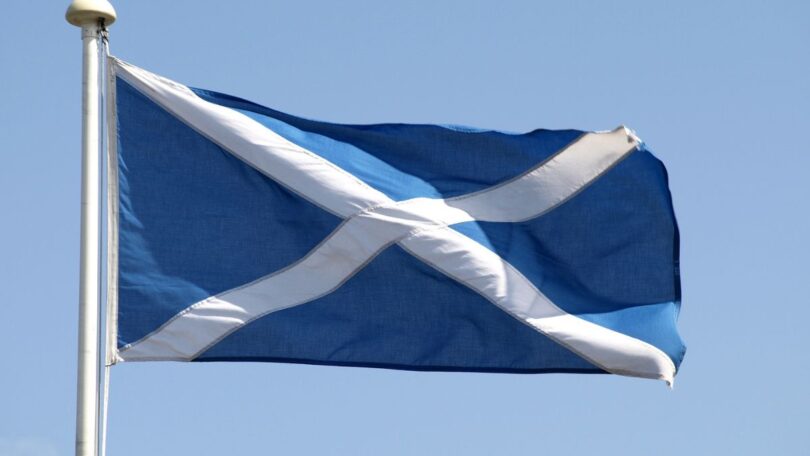

It has been 28 years. Since France 1998, Scotland have not appeared at a FIFA World Cup. For a nation that was one of the game’s founding fathers — Scotland played in the first-ever international match against England in 1872 — that absence has been a source of deep frustration and national longing. FIFA World Cup 2026, therefore, is not just another football tournament for Scottish football. It is a homecoming. It is a declaration that the Tartan Army has returned to the greatest stage in world sport.
Scotland are placed in Group C alongside Brazil, Morocco, and Haiti. On paper, this is one of the most difficult group draws Scotland could have received. Placed in the same group as the five-time world champions and the 2022 semi-finalists, Scotland face an extraordinarily challenging path. But football is not played on paper, and Scotland arrive at FIFA World Cup 2026 with a generation of players who have developed through the Premier League and European football with quality that previous Scottish generations did not possess.
Know your Scotland squad numbers? Can you name every Tartan Army player at FIFA 2026 by their jersey number? Take the Jersey Quiz and test yourself on Scotland and all 48 nations!
Play the FIFA 2026 Jersey Quiz – Scotland Edition!
Scotland’s Long Journey Back to the World Cup
Scotland’s qualification for FIFA World Cup 2026 ended nearly three decades of hurt. The Tartan Army — one of football’s most beloved, passionate, and famously self-deprecating travelling supporters — had followed their team through agonising near-misses, playoff defeats, and qualification campaigns that ended in heartbreak for much of the 21st century. When Scotland finally sealed their place in the 2026 tournament, the scenes of celebration among players, fans, and Scottish football staff were genuinely emotional. This qualification was earned through years of patient development, investment in coaching, and the emergence of a generation of Scottish players performing consistently at the highest club level.
Under manager Steve Clarke — one of the most respected and methodical coaches in British football — Scotland have developed a cohesive, organised tactical identity. They are not a team that tries to out-possess top opponents. They are a team that works extremely hard out of possession, is difficult to break down, and looks to capitalise on transition moments and set pieces. Against Brazil and Morocco, that approach will be tested to its absolute limits.
Scotland’s Key Players
Andrew Robertson — Liverpool’s long-serving left-back and one of the Premier League’s best defenders for much of the past decade — remains Scotland’s most experienced and technically accomplished player. His attacking runs from left-back, his crossing quality, and his defensive commitment make him Scotland’s most reliable performer. As captain, his leadership in the dressing room and his experience of competing against elite opponents at Champions League level give Scotland an important resource.
Scott McTominay has transformed from a Manchester United squad player into one of Scotland’s most important performers. The central midfielder — now at Napoli in Serie A — scored crucial goals in Scotland’s qualification campaign and has developed his all-round game significantly. His physical presence, his ability to arrive late into the box, and his goalscoring from midfield positions give Scotland an unexpected goal threat from a non-obvious position.
Ryan Christie and Billy Gilmour provide creative midfield quality that can unlock defences in the right moments. Scotland’s wide players have pace and directness. Their strike options, while not at the level of Brazil or Morocco’s attacking threats, are capable of scoring goals against less physically dominant defences.
Group C – The Greatest Test in Scottish World Cup History
Brazil — five-time world champions with Vinicius Junior and a supporting cast of world-class attackers — are the most famous name Scotland have ever faced in a competitive match. The prospect of Scotland vs Brazil at a World Cup is one that generates global attention and genuine excitement. Scotland will need to produce their best defensive performance to limit Brazil’s attacking threat, while also looking to exploit any moments when Brazil’s full-backs push too high and leave space in behind.
Morocco — the 2022 semi-finalists and one of Africa’s most feared nations — are a more physically comparable challenge for Scotland in terms of potential result. Morocco’s defensive organisation and counter-attacking threat is not insurmountable for a well-organised Scotland team. This is the match in Group C where Scotland will feel they have their best chance of a positive result.
Haiti are making their World Cup appearance and will be focused on competitive, physical football. Scotland must beat Haiti comfortably to have any hope of accumulating enough points for the group’s third-place advancement. A failure to beat Haiti would effectively end Scotland’s World Cup before the major matches have even been played.
Scotland’s Realistic Ambitions
Reaching the Round of 32 from Group C would require Scotland to accumulate enough points — likely at least 4 — to finish among the best third-placed teams. Beating Haiti comfortably and taking something from either Brazil or Morocco is the required combination. A draw against Morocco, combined with a heavy Haiti win, could be enough. A defeat in all three matches would be a disappointment given Scotland’s quality.
Whatever happens, Scotland’s return to the World Cup stage after 28 years is an achievement that deserves to be celebrated. The Tartan Army — thousands of whom will travel to the United States for these matches — will make more noise per capita than virtually any other set of fans in the tournament. Scotland at a World Cup is always an occasion, and in 2026, it is an historic one.
Scotland’s FIFA World Cup 2026 Group C Schedule
- Match 1: Haiti vs Scotland – June 14, 2:00 AM ET (June 13 local evening) | Gillette Stadium, Boston
- Match 2: Scotland vs Morocco – June 19, 6:00 PM ET | Gillette Stadium, Boston | 11:00 PM BST / 3:30 AM IST June 20
- Match 3: Scotland vs Brazil – June 24, 11:00 PM ET | Hard Rock Stadium, Miami | 4:00 AM BST June 25 / 8:30 AM IST June 25
Scotland are back at the World Cup! Test your Tartan Army knowledge — can you name every Scotland player by their squad number? Take the FIFA 2026 Jersey Quiz and find out!
Play the FIFA 2026 Jersey Quiz Now!
Frequently Asked Questions
When was Scotland’s last FIFA World Cup before 2026?
Scotland last appeared at a FIFA World Cup in France 1998, where they were eliminated in the group stage. Their qualification for FIFA World Cup 2026 ends a 28-year absence — the longest gap in Scotland’s World Cup history.
Which group is Scotland in at FIFA World Cup 2026?
Scotland are in Group C alongside Brazil, Morocco, and Haiti.
Who is Scotland’s manager at FIFA World Cup 2026?
Steve Clarke has been Scotland’s manager since 2019 and led the team through their successful qualification campaign for FIFA World Cup 2026.
Has Scotland ever reached the World Cup knockout stages?
No. Scotland have participated in eight FIFA World Cups but have never advanced beyond the group stage. Their exits have often been dramatic — in 1974 and 1978, they were eliminated on goal difference despite not losing a match. A Round of 32 advancement in 2026 would be a historic first.
How can I watch Scotland at FIFA World Cup 2026 in the UK?
Scotland’s FIFA World Cup 2026 matches will be broadcast on BBC Sport and ITV in the UK — free-to-air coverage that will attract enormous Scottish audiences for every match, particularly the Brazil encounter.
Follow every Scotland match, result, and the full Group C standings at theOpenHandbook’s FIFA World Cup 2026 hub.