
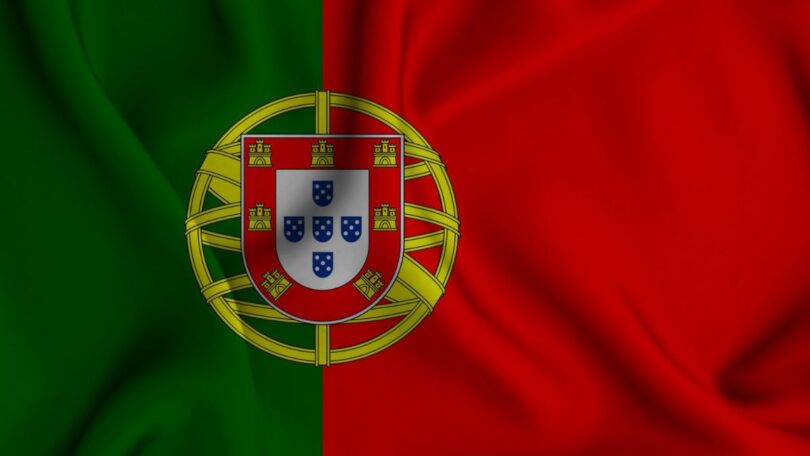

In the vast, extraordinary story of world football, few final chapters will carry the emotional weight that FIFA World Cup 2026 holds for Cristiano Ronaldo. At 41 years old, the most prolific goal scorer in the history of professional football — the man who has won five Ballon d’Or awards, five UEFA Champions League titles, and broken virtually every individual record that exists in the game — has one ambition left unfulfilled. He has never won the FIFA World Cup. And this, almost certainly, is his last chance.
Portugal are drawn in Group K alongside Congo DR, Uzbekistan, and Colombia. It is a group they are heavy favourites to top. But the story of Portugal at World Cup 2026 is not primarily about the group stage. It is about whether Ronaldo — and this talented Portuguese generation — can navigate six matches and lift the one trophy that has eluded the greatest individual player of his era.
Can you name every Portugal player by their jersey number? The FIFA 2026 Jersey Number Quiz covers all 48 nations — test your CR7 knowledge and the full Portuguese squad in 10 rounds!
Play the FIFA 2026 Jersey Quiz Now!
The Messi vs Ronaldo World Cup Legacy Question
The greatest debate in football history — Messi or Ronaldo? — took a significant turn when Lionel Messi lifted the World Cup in Qatar in 2022. For those who had always argued that Ronaldo’s lack of a World Cup title was the definitive evidence that Messi was greater, that moment settled it. For Ronaldo and his supporters, FIFA World Cup 2026 is the chance to make the argument irrelevant.
Ronaldo did not hide his emotion at Qatar 2022, where Portugal were eliminated in the quarter-finals by Morocco — the same Morocco who went on to reach the semi-finals. He was visibly upset on the pitch after the final whistle, knowing that at his age, another World Cup was not guaranteed. Yet here he is, four years later, still competing, still scoring, still representing his country, and still dreaming.
Whether or not you believe this rivalry can or should be settled by a World Cup title, the emotional narrative around Ronaldo at FIFA 2026 is undeniable. Every goal he scores will be analysed. Every substitution will be debated. Every match will carry a sense of “this could be the last time.” The world will be watching, regardless of which team they support.
Portugal’s Squad – World No.5 With Genuine Title Credentials
Portugal entered FIFA World Cup 2026 ranked fifth in the world, a position that reflects both their quality and the fierce competition at the top of the global rankings. This is not a one-man team. Portugal’s squad is genuinely deep, technically excellent, and tactically sophisticated. Their recent record in international competition — including strong performances in the UEFA Nations League and consistent World Cup and Euro qualification — demonstrates they are consistently among Europe’s elite.
Beyond Ronaldo, Portugal’s most exciting player is Rafael Leao — the AC Milan forward whose combination of pace, elegance, and directness makes him one of the most dangerous wide attackers in world football. Leao brings a dimension to Portugal’s attack that complements and does not depend on Ronaldo. When both are at their best simultaneously, Portugal’s attack becomes genuinely unstoppable.
Bruno Fernandes, the Manchester United captain and one of the most creative midfielders in European football, is the engine behind Portugal’s attacking play. His ability to dictate tempo, find key passes in tight spaces, and score goals from midfield positions makes him essential to how Portugal build attacks. His relationship with Ronaldo — and his ability to find him in dangerous positions — is central to the team’s attacking output.
Ruben Dias in central defence represents Portugal’s foundation of defensive quality. The Manchester City captain is widely considered one of the best centre-backs in the world — commanding in the air, technically assured on the ball, and an organising presence that holds the defensive line together. With Dias anchoring the defence, Portugal can commit forward with confidence knowing they have a world-class organiser protecting the goal.
In goal, Diogo Costa has developed into a top-level international goalkeeper with excellent distribution — crucial in Portugal’s build-up play from the back. He has saved penalties in high-pressure moments and has the mentality to perform in the biggest games.
Group K – Portugal’s Path to the Knockout Stage
Group K presents Portugal with their most accessible group stage in recent World Cup history. Congo DR are the most challenging of their three opponents — an African team capable of physical intensity and tactical disruption. Uzbekistan are making a rare major tournament appearance and will be focused on defending and keeping matches close. Colombia, despite not being at full strength in this group positioning, bring South American technical quality and physicality.
Portugal are expected to advance from Group K as top seeds. Their priority in the group stage will be winning all three matches, maintaining a positive goal difference, and — critically — keeping Ronaldo fit and sharp for the knockout rounds. At 41, his minutes may need to be managed carefully to ensure he arrives at the Round of 16 and beyond in peak condition.
Ronaldo’s Role in This Portugal Team
One of the most fascinating questions about Portugal at FIFA World Cup 2026 is how Ronaldo fits into the team at this stage of his career. He is no longer the explosive, pace-driven attacker of his Real Madrid peak. His game has evolved. He is now a penalty-box predator — a centre-forward who relies on positioning, aerial ability, timing of runs, and penalty-kick expertise rather than direct dribbling and pace.
Portugal’s coaching staff will have given deep thought to how Ronaldo fits alongside Leao and other dynamic attackers. The system needs to create chances that Ronaldo can convert from close range and from set pieces. If those chances arrive, his finishing — even at 41 — remains at the highest level. If the system does not create those opportunities, Ronaldo can become a passenger in matches that require different types of attacking contribution.
The management of Ronaldo’s ego, his desire to play every minute of every match, and the team’s need to sometimes be more fluid and dynamic without him — these are the difficult decisions that Portugal’s coaching team must navigate with wisdom and sensitivity. How well they manage this balance will be a significant factor in how far Portugal go.
Portugal’s Tactical Setup
Portugal typically operate in a 4-3-3 or 4-2-3-1 system that provides attacking width, midfield control, and a central striker option. Bruno Fernandes operates in the “10” role behind Ronaldo — or in the case of a wider system, as an advanced central midfielder who links play. The full-backs push forward aggressively, and Portugal’s entire left side — with Leao’s pace and direct running — is one of the most dangerous attacking outlets in world football.
Defensively, Portugal are well-organised and difficult to break down in knockout matches. Their record of conceding goals in recent tournaments is strong. The combination of Dias at centre-back and Costa in goal gives them a defensive foundation that can handle the best attacking players in the world.
Can Portugal Win the World Cup?
Portugal are ranked among the top five favourites for FIFA World Cup 2026. Their squad quality is genuine. They have the depth, the organisation, and — in Ronaldo — the motivational narrative that can drive a team to extraordinary performance under pressure. The question is whether everything comes together at the right moments across six matches over three weeks.
History suggests Portugal as a team tend to perform better than expected in tournaments (their 2016 Euro win being the defining example) while occasionally falling short against the very best opposition at the key moment. If Portugal reach the semi-finals — which their squad quality fully warrants — they face the potential challenge of France, Spain, or Argentina. Those are the matches where the difference between a good tournament and a legendary one is made.
If Ronaldo is in form, if Leao and Fernandes are at their best, and if Portugal’s defensive organisation holds under pressure — a final appearance is possible. A trophy would rewrite the legacy debate permanently.
Test your Portugal knowledge! Can you name every player in Ronaldo’s squad by jersey number? The FIFA 2026 Jersey Quiz has 10 questions per team — play Portugal, then challenge any other nation!
Play the FIFA 2026 Jersey Quiz Now – Portugal Edition!
Portugal’s FIFA World Cup 2026 Fixtures – Group K
- Match 1: Portugal vs Congo DR – Group K (Date: approx. June 16–17)
- Match 2: Portugal vs Uzbekistan – Group K (Date: approx. June 20–22)
- Match 3: Portugal vs Colombia – Group K (Date: approx. June 24–26)
Frequently Asked Questions
How old is Cristiano Ronaldo at FIFA World Cup 2026?
Cristiano Ronaldo was born on February 5, 1985, making him 41 years old during FIFA World Cup 2026 in June–July 2026. He is the oldest outfield player at the tournament among the elite European and South American nations.
Has Cristiano Ronaldo ever won the FIFA World Cup?
No. The FIFA World Cup is the one major international title Cristiano Ronaldo has never won. He has won the UEFA Euro Championship with Portugal in 2016, but the World Cup has always eluded him at the tournament stage.
Is this Cristiano Ronaldo’s last World Cup?
Almost certainly yes. At 41, Ronaldo would need to be playing at a top international level until he is 45 to compete at the 2030 World Cup. FIFA World Cup 2026 is widely expected to be his final appearance on the World Cup stage.
Which group is Portugal in at FIFA World Cup 2026?
Portugal are in Group K alongside Congo DR, Uzbekistan, and Colombia.
Who are Portugal’s key players at FIFA World Cup 2026 beyond Ronaldo?
Portugal’s key players include Bruno Fernandes (Manchester United, attacking midfield), Rafael Leao (AC Milan, forward), Ruben Dias (Manchester City, centre-back), and Diogo Costa (goalkeeper). This is a squad with exceptional depth and European club quality throughout.
Follow Portugal’s journey game by game — match previews, results, squad news, and every Ronaldo moment — on theOpenHandbook’s FIFA World Cup 2026 coverage hub.